
by Werner | Thought Leadership, on Mar 04, 2026
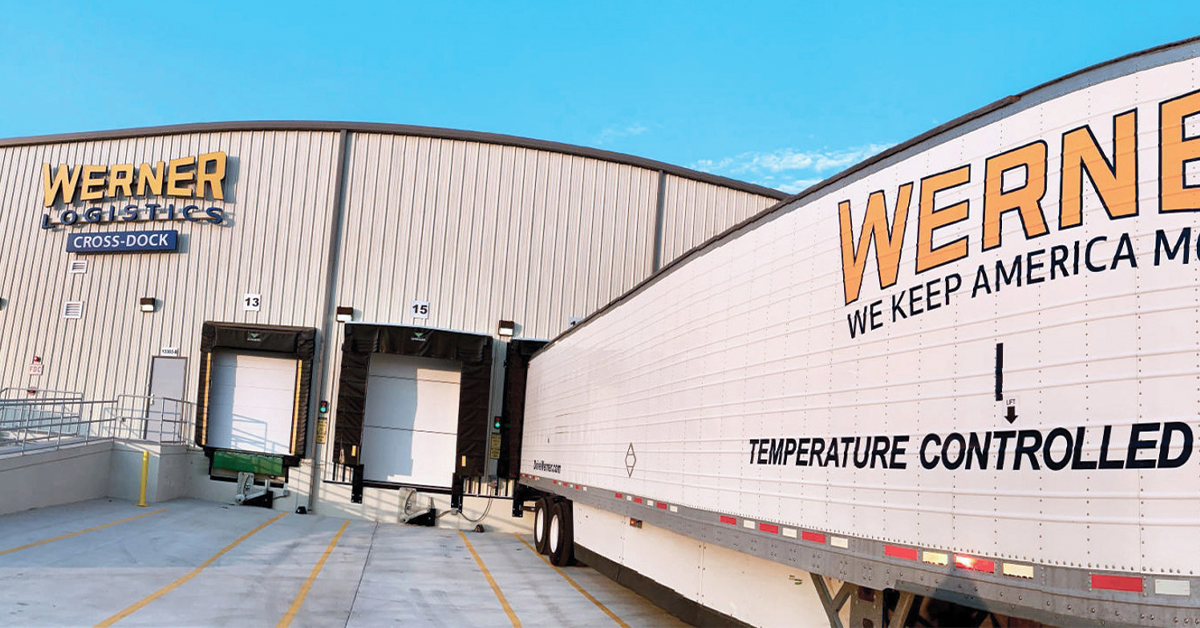
At Food Shippers of America, one theme consistently rises to the surface: in food logistics, performance is measured in precision.
For FSA members — retailers, wholesalers and food manufacturers — supply chains operate on immovable store delivery windows, tight shelf-life constraints and thin operating margins. A late delivery is not only an inconvenience. A temperature deviation is not simply a service issue. Both can translate immediately into lost sales, shrinkage, retailer penalties and brand impact.
Cold chain performance is no longer an operational line item. It is a business safeguard.
Grocery Networks Leave No Margin for Error
Unlike some industries, food and grocery distribution operates in a near-zero-failure environment.
Retail replenishment cycles are fixed. Promotions are time-bound. Distribution centers are engineered around tightly scheduled dock throughput. Proteins, dairy, frozen foods and fresh produce move against strict temperature thresholds and shelf-life clocks. In this environment, even small disruptions carry outsized consequences:
- A missed appointment can ripple across store replenishment
- A brief temperature excursion can trigger a rejected load
- A cross-dock delay can compress already narrow shelf-life windows
Layer onto this:
- Unpredictable refrigerated capacity cycles
- Heightened regulatory control
- Growing cross-border produce flows
- Demand swings tied to promotions, holidays and weather events
For FSA members, these are not abstract risks. They are daily realities.
Visibility Is Expected. Execution Is Differentiating.
Real-time temperature monitoring, telematics and GPS tracking are now baseline expectations across for food logistics. But data alone does not protect product integrity.
What protects the product is disciplined execution:
- Proactive rerouting during severe weather
- Immediate response to temperature alerts
- Close coordination between drivers, dispatch and operations
- Rapid recovery plans when disruption occurs
This level of execution becomes repeatable when operations are structured around a dedicated framework. When drivers, equipment and support teams are aligned to a specific network, delivery patterns become familiar. Retail nuances are understood. Seasonal surges are anticipated rather than reacted to.
For food shippers operating within high-frequency store replenishment environments, consistency is a competitive advantage.
Dedicated Capacity as Risk Management
Refrigerated equipment remains among the most specialized and compliance-intensive assets in the transportation market. When capacity tightens, it tightens quickly — and often disproportionately within temperature-controlled segments.
For FSA members committed to fixed retail delivery schedules, reliance on spot capacity introduces volatility:
- Rate instability
- Service inconsistency
- Increased exposure to rejected loads or missed store windows
Dedicated capacity mitigates these risks by creating a stable operating structure aligned to the shipper’s distribution cadence. It transforms transportation from a reactive procurement function into a controlled supply chain component. In markets defined by unpredictability, stability drives performance.
Dedicated Capacity Designed for Seasonal Performance and Peaks
Food demand is inherently cyclical. Harvest seasons, holiday surges, promotional campaigns and regional weather patterns all create predictable — yet intense — volume fluctuations.
Resilience does not come from scrambling for capacity during peak periods. It comes from designing flexibility into the network itself.
Dedicated supply chain solutions enable:
- Forecasting and pre-positioning refrigerated assets
- Aligning driver availability to peak periods
- Embedding protect-from-freeze protocols
- Building structured overflow and contingency strategies
For FSA members, where retailer scorecards and service metrics directly impact long-term partnerships, engineered flexibility guards both performance and reputation.
Transportation as a Strategic Lever
At its core, Food Shippers of America represents companies that understand transportation is not simply a cost center; it is a strategic function that influences:
- In-stock percentages
- Shrink reduction
- Inventory turns
- Retailer relationships
- Consumer satisfaction
For food shippers operating in temperature-controlled networks, the right transportation partner must do more than move freight. They must operate as an extension of the supply chain itself.
That is where a dedicated solution — supported by a transportation provider with the scale, temperature-control expertise and operational discipline to execute consistently — becomes essential.
Werner’s dedicated supply chain solutions are designed specifically for high-performance grocery and food distribution environments. By aligning drivers, equipment, maintenance, safety and account management teams around a shipper’s unique retail cadence, Werner helps improve transportation into a controllable, performance-driven lever.
When operating within a dedicated framework, collaboration goes beyond load execution. Alignment strengthens around:
- Just-in-time store replenishment
- Distribution center throughput optimization
- Seasonal sourcing and grower cycles
- Continuous improvement initiatives
- Cost-to-serve visibility
This structured partnership enables food shippers to anticipate demand swings, protect temperature integrity and reduce service variability — all while maintaining the stability required in retail-driven networks.
Cold chain logistics touches the consumer experience more directly than almost any other supply chain function. The product that reaches the shelf in peak condition reflects the precision of the transportation network behind it. With temperature-controlled capacity, advanced visibility tools and disciplined execution processes, Werner provides the level of precision required for food logistics.
Looking Ahead
Food supply chains continue to operate under sustained pressure. Consumers expect freshness year-round. Replenishment windows continue to tighten. Regulatory oversight increases. Capacity volatility remains constant.
In this environment, temperature-controlled freight cannot be treated as interchangeable market capacity.
It requires:
- Infrastructure designed for perishable networks
- Accountability embedded in the operating model
- Disciplined execution aligned to retail cadence
For Food Shippers of America members, precision is non-negotiable. Consistency protects revenue. And with a partner like Werner — purpose-built to support the unique demands of grocery and food distribution — disciplined dedication becomes a competitive advantage that sustains growth.
Like this kind of content? Subscribe to our "Food For Thought" eNewsletter!
Now more than ever, professionals consume info on the go. Distributed twice monthly, our "Food For Thought" e-newsletter allows readers to stay informed about timely and relevant industry topics and FSA news whether they're in the office or on the road. Topics range from capacity, rates and supply chain disruption to multimodal transportation strategy, leveraging technology, and talent management and retention. Learn More