

by Staff, on Aug 25, 2026

The food supply chain has always followed the consumer. But shifts in how Americans eat are becoming more pronounced, which is creating new challenges for food manufacturers, distributors and the providers that serve them.
One of the biggest and most recent catalysts is the rapid adoption of GLP-1 medications for weight management and diabetes. These drugs suppress appetite and eating habits, but their impact is increasingly being felt far beyond the pharmacy. Consumers taking GLP-1s are buying less food overall, shifting away from some indulgent categories and putting greater emphasis on protein, fresh foods and smaller portions.
GLP-1s are arriving alongside other changes already reshaping food consumption, including increased demand for protein, healthier ingredients, convenience and more personalized nutrition. Together, these trends could gradually change not only what food moves through America's food supply chain, but how it moves.
GLP-1 Use Trends and Their Impact on Food Consumption
The scale of the GLP-1 trend is becoming difficult for the food industry to ignore.
PwC reported in June 2026 that 21% of U.S. households now include a current GLP-1 user, more than double the 9% it measured in January 2025. Grocery spending among GLP-1 households was 5.5% lower as consumers reduced purchases of snacks, sugary beverages and alcohol while buying more produce and protein.
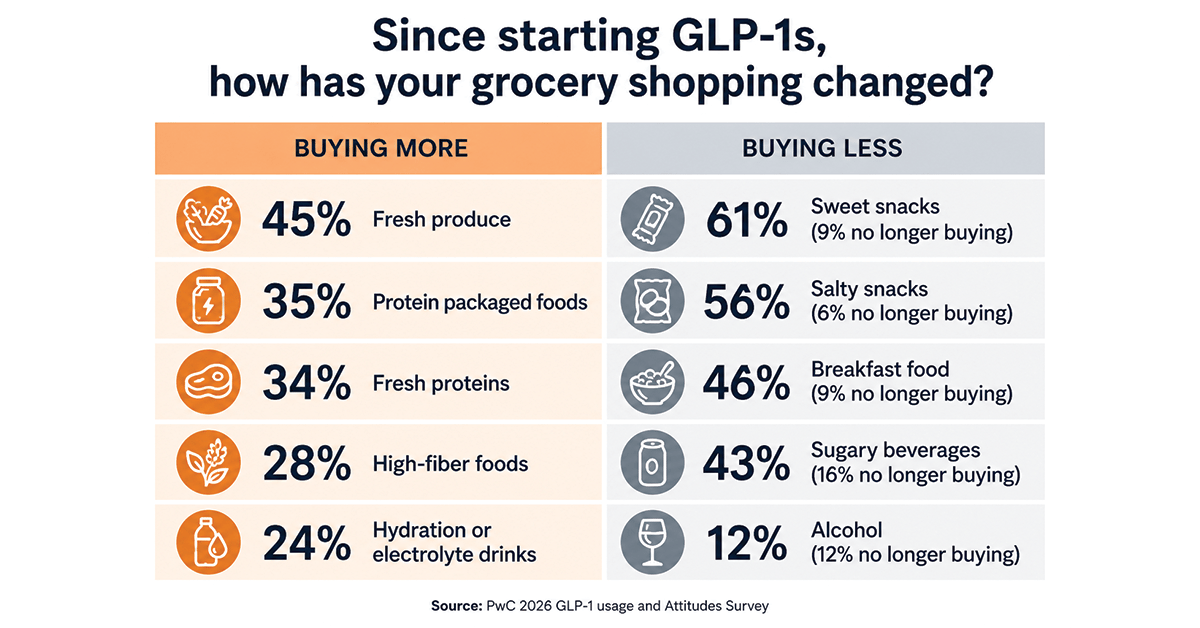
Academic research has found a similar effect. A study highlighted by Cornell University found that grocery spending declined an average of 5.3% within six months after a household began using a GLP-1 medication. Savory snacks declined about 10%, while sweets, baked goods and cookies also experienced significant reductions. Yogurt, fresh fruit, nutrition bars and meat snacks were among the relatively few categories that increased.
The implications become more significant if adoption continues growing. Circana estimates households using GLP-1 medications could account for 35% of U.S. food and beverage units sold by 2030.
What does the use of GLP-1 potentially mean to overall business strategy of food companies?
Nestlé is leveraging its expertise in protein innovation to deliver differentiating nutritional solutions for consumers focused on weight management, including GLP-1 weight loss medication users. This is a strategic focus area for the company’s innovation efforts.
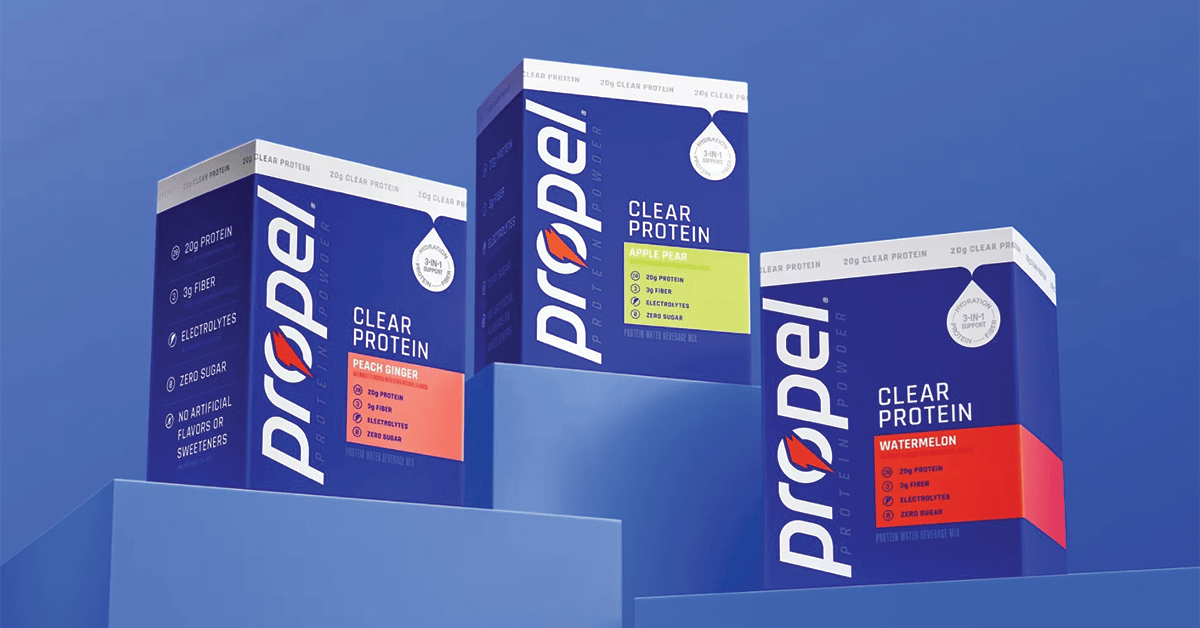
PepsiCo recently announced its Propel Clear Protein ready-to-mix powder now offers 3-in-1 benefits of protein (20g), fiber (3g) and hydration in one flavorful sip. Developed with registered dietitians with GLP-1 users in mind, Propel Clear Protein fills consumer demand for refreshing protein options and multifunctional beverages that support active wellness goals.
Conagra Brands announced its Healthy Choice® product line will feature an "On Track" badge on 26 select items, indicating that the products are high in protein, low calorie, and a good source of fiber, which make these items "GLP-1 friendly."
The Potential Impact on Food Chains
For supply chains in the food industry, that doesn't necessarily mean dramatically less freight. Yet it could mean different freight.
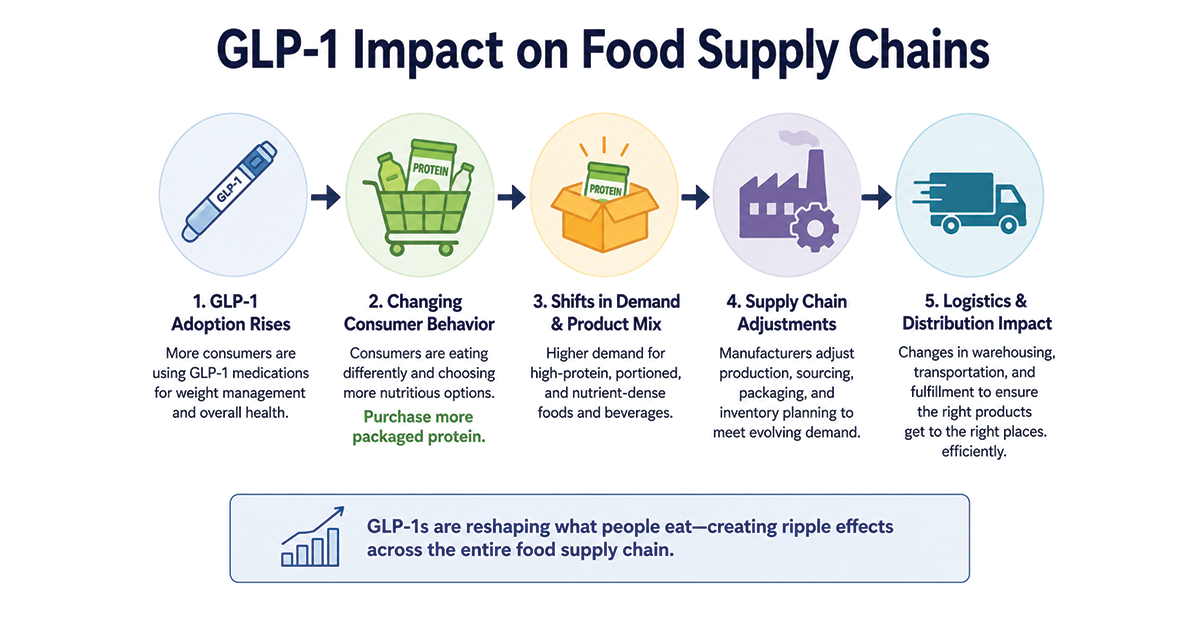
Perhaps the clearest beneficiary of changing eating habits is protein. Consumers increasingly view protein as part of a broader health and wellness strategy, and GLP-1 users appear to be accelerating that movement. PwC found 35% of GLP-1 users surveyed were buying more packaged protein and 34% were purchasing more fresh protein. Purchases of Greek yogurt and jerky also increased.
FMI recently reported during its recent Annual Meat Conference that GLP-1 users over-index compared with non-users are eating more meat and poultry. Research published in Food Policy in January also found GLP-1 use increases consumers' willingness to pay for protein products.
This shift can have significant supply chain consequences.
More demand for meat, dairy, produce and other fresh products can translate into greater reliance on refrigerated transportation, cold-storage facilities, and tightly controlled delivery windows. Such products that require temperature control often have shorter shelf lives and less tolerance for transportation delays than shelf-stable packaged foods.
A consumer spending a dollar less on cookies and a dollar more on yogurt therefore isn't simply changing the manufacturer's sales mix. That decision can change the transportation and warehousing requirements behind the purchase.
Smaller Portions Could Mean More SKUs
Consumers using GLP-1 treatments aren't only changing what they eat; increasingly, they're reconsidering how much they eat at one time.
PwC found that 35% of current and former GLP-1 users want restaurants to offer smaller portions at proportionally lower prices, while 32% want half portions or split plates without additional charges. Circana has also found that GLP-1 users are ordering fewer items per restaurant visit and that smaller portions are part of a broader health-driven trend extending beyond medication users.
Food manufacturers are responding with portion-controlled products, protein-forward meals and smaller package formats. Yet, smaller packages don't necessarily make supply chains simpler.
Manufacturers may need additional packaging configurations and production runs. Distributors could carry more SKUs representing different portion sizes of essentially the same product. Warehouses may have to pick a wider variety of products in smaller quantities.
That creates a paradox for logistics providers: Consumers may eat less while the supply chain becomes more complex.
Focus on Health and Wellness Continue for Consumers
GLP-1 medications are part of a much larger consumer movement toward food as a component of health and wellness.
McKinsey's State of Grocery North America 2026 research found that 47% of consumers seek specific functional benefits such as high protein or low sugar when grocery shopping. FMI has similarly pointed to the convergence of GLP-1 medications, "Food as Medicine" programs and changing perceptions of health as forces affecting the fresh-food industry.
Consumers increasingly want products that accomplish something beyond satisfying hunger: more protein, more fiber, less sugar, better hydration or other nutritional benefits.
That encourages food companies to reformulate existing products and introduce new ones. In addition, every change to the product portfolio can eventually ripple downstream through ingredient sourcing, manufacturing, packaging, inventory as well as transportation.
Suppliers of protein ingredients, fruits and vegetables, dairy products and functional ingredients could see growing opportunities, while manufacturers heavily exposed to traditional indulgent categories may face pressure to adjust their portfolios.
Convenience Isn't Going Away
Healthier eating does not necessarily mean consumers suddenly have more time to prepare meals.
That makes the intersection between health and convenience particularly important – and this has implications for food chains.
Circana says GLP-1 households increasingly favor high-protein, hydration-oriented and convenient snack products. It has identified high-protein ready-to-eat meals and portion-controlled snacks as areas positioned to benefit from changing preferences.
For transportation and logistics providers that serve the food industry, that could reinforce demand for sophisticated networks capable of moving fresh and prepared foods quickly.
Instead of the traditional distinction between shelf-stable grocery products and fresh foods, more products may sit somewhere in between: refrigerated protein snacks, prepared meals, yogurt, fresh-cut produce and other convenient products with relatively short shelf lives.
That puts a premium on inventory visibility, accurate forecasting and reliable transportation.
Forecasting Can Become More Complex
With this growing trend in GLP-1 usage, perhaps the biggest supply chain challenge is uncertainty.
Consumer habits don't change uniformly, and GLP-1 use itself can fluctuate. Cornell's research found that roughly one-third of GLP-1 users in its study stopped taking the medication. After discontinuation, their food spending moved back toward previous levels. Circana likewise found that some purchasing behaviors persist after consumers stop using GLP-1s while others reverse.
That makes forecasting more complicated.
A manufacturer could experience declining volume in one product line while seeing rapid growth in another. Retailers may need to adjust shelf space faster. Distributors may find historical ordering patterns become less reliable.
Transportation and logistics providers ultimately feel those changes downstream through shifts in shipment volumes, origins and destinations, seasonality and equipment requirements.
The Supply Chain Follows the Plate
The food industry has adapted to major dietary shifts before — from low-fat foods to organic products, plant-based alternatives and the growth of snacking.
GLP-1s may prove different because of their potential scale and because they reinforce several trends that were already underway.
Consumers are increasingly prioritizing protein, health and convenience while becoming more selective about calories and portion sizes. Circana's projection that GLP-1 households could account for more than a third of food and beverage units sold by 2030 suggests these behaviors are no longer a niche consideration.
For supply chain executives, the question therefore isn't simply whether Americans will eat less — rather, it is what they will eat instead.
The answer could determine which ingredients need to be sourced, which factories add capacity, which warehouses require more refrigerated space and which types of freight have the strongest growth prospects.
The American diet continues to change — particularly with the use of GLP-1 treatments. The supply chains, trucks, warehouses and distribution networks that keep it supplied will need to change with it.
Related Articles:
- Inside the Modern Supply Chain
- Sourcing Smarter: Strengthening the Food Supply Chain through Strategic Procurement
- Navigating Supply Chain Challengs
- Is Consumption Finally Back to Normal?
- Food Chain Shifts: COVID’s Impact on Consumer Behavior, Other Trends
Like this kind of content? Subscribe to our "Food For Thought" eNewsletter!

Now more than ever, professionals consume info on the go. Distributed twice monthly, our "Food For Thought" e-newsletter allows readers to stay informed about timely and relevant industry topics and FSA news whether they're in the office or on the road. Topics range from capacity, rates and supply chain disruption to multimodal transportation strategy, leveraging technology, and talent management and retention. Learn More