
by Staff, on Jul 21, 2026
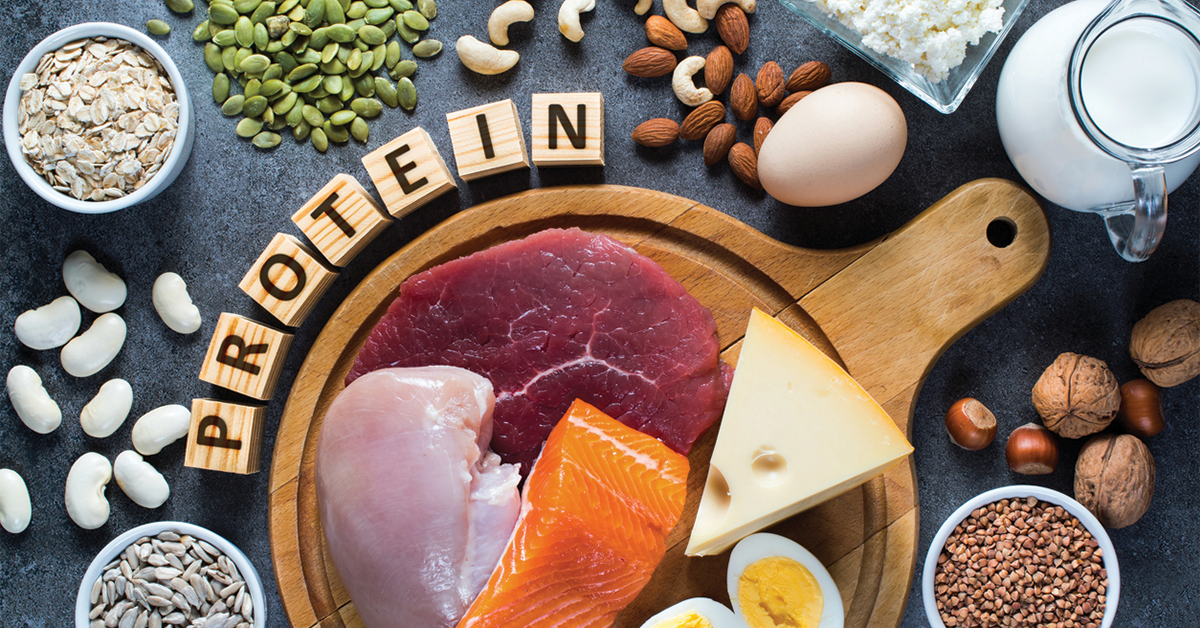
From avian flu and livestock disease outbreaks to geopolitical tensions, extreme weather and transportation disruptions, today's protein supply chains face unprecedented volatility.
Given more than 80% of members of Food Shippers of America (FSA) are involved in managing protein-based products in their purchasing and supply chains activities, such volatility can create significant challenges for most members. For food manufacturers, distributors and retailers, proteins represent some of the most valuable — and vulnerable — ingredients in their supply chains.
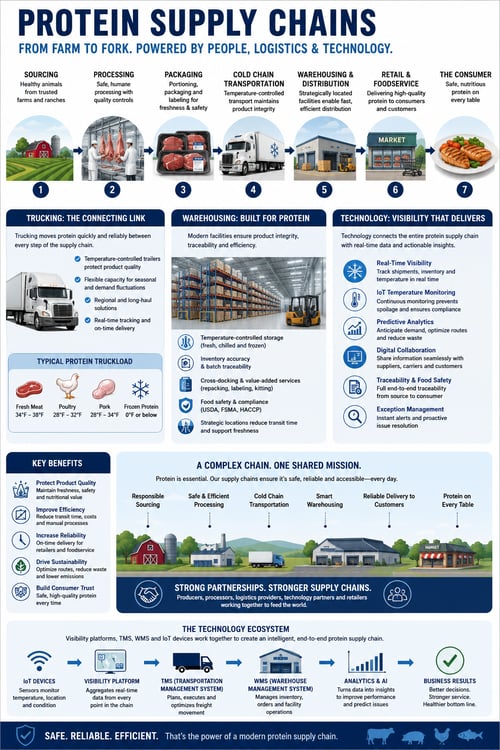
Unlike many shelf-stable commodities, proteins such as beef, poultry, pork, seafood and dairy products often have limited shelf lives, stringent temperature requirements and relatively few qualified suppliers. A disruption at a single processing plant or supplier can quickly ripple through production schedules, customer commitments and financial performance.
 “Navigating the complexities of a global supply chain is like being an air traffic controller,” says Matt Strampe, who oversees supply chain operations for Hormel Foods International, a global branded food company with protein as its largest product category (pork, turkey, beef, chicken, bacon, deli meats and more). “You’re constantly balancing hundreds of moving parts — from regulatory constraints to regional partnerships — all while ensuring the seamless flow of products across borders.
Proteins Create Unusual Supply Chain Risks
 Every supply chain carries risk, but those in the protein category create an unusual combination of operational challenges, particularly because of the wide range of handling requirements with meat and non-meats (i.e., beef versus whey versus nuts). This is according to Glynn Tonsor, Professor, Department of Agricultural Economics with Cansas State University, who has 125-plus peer-reviewed publications, and speaks regularly to in-person audiences. He also grew up on a farrow-to-finish swine farm in Monroe City, MO.
In particularly, he says there are big risks associated with animal meats originating in the supply chain: “The biggest short-term, on-farm risk stems from possible animal disease disruptions. Inner-industry and post farm-gate, labor disruptions around converting live animals into edible consumer products is top of mind as a risk.”
Food shippers understand that because proteins often represent one of the highest-cost components of finished food products, even modest supply disruptions — from original source to final point of consumption — can significantly impact margins. Protein supply chains also remain highly susceptible to external disruptions, including:
- Animal disease outbreaks such as Highly Pathogenic Avian Influenza (HPAI) or African Swine Fever
- Weather events affecting livestock production or feed availability
- Processing plant shutdowns or labor shortages
- Transportation capacity constraints
- Trade restrictions and tariffs
- Food safety recalls
- Regulatory changes
- Geopolitical instability affecting imports and exports
 Laura Yañez sees protein sourcing risk coming from three connected areas: availability, eligibility and execution. With more than 20 years of commodity experience, Yañez is Managing Director of TradeCafe Logistics Solutions (TCX), a shipper-built division of TradeCafe that is in the international trade of agricultural commodities, raw proteins, dairy and fish.
“Perishability compresses the response window,” she explains. “A missed pickup, refrigeration failure, border delay or documentation error can reduce shelf life and threaten production schedules and customer commitments. Often, the loss comes from several small failures occurring in sequence rather than one dramatic event. For protein, a sourcing decision is not complete when the supplier is approved. The product, market eligibility, cold-chain capacity, documentation, route and recovery plan must all be executable.”
For perishable inventory of meats, the objective is neither maximum stock nor minimum stock, advises Yañez. “It is having enough usable shelf life in the right location when demand occurs. Policies should distinguish among fresh, chilled and frozen products and incorporate first-expired, first-out rotation, lot and expiry tracking, minimum remaining shelf-life requirements at receipt, disciplined receiving windows, and replenishment based on supplier and transit-time variability.”
Contingency Planning Has Become a Competitive Advantage
For many food companies, contingency planning is no longer simply an emergency response exercise. It has become an essential component of supply chain strategy.
Rather than waiting until a disruption occurs, organizations are developing predefined response plans that identify alternative suppliers, transportation providers, production facilities and inventory strategies before they're needed.
These contingency plans typically address questions such as:
- Which suppliers can increase production on short notice?
- What alternative protein formulations have already been approved?
- Which transportation partners can respond immediately?
- How much safety stock should be maintained?
- Which customers receive priority allocations during shortages?
Having these decisions made before a disruption occurs can dramatically reduce response times while minimizing service interruptions.
Nestlé has one of the most comprehensive descriptions of contingency plans in place. Like many smart food shippers, its public mitigation strategies include business continuity and disaster recovery plans for key facilities, multiple sourcing options, localized sourcing where practical, commodity price risk management, supply chain risk assessment, and responsible and traceability programs.
Nestlé’s plan is essentially a layered contingency model to prevent disruption, detect disruption early, switch suppliers or production, and recover operations quickly.
Strategic Suppliers Replace Transactional Relationships
Perhaps the biggest shift occurring across protein procurement and supply chains is the move from transactional purchasing toward strategic supplier partnerships.
Rather than selecting suppliers based primarily on price, food manufacturers increasingly view suppliers as collaborative partners responsible for helping maintain business continuity. These partnerships often include:
- Long-term supply agreements
- Joint business planning
- Shared demand forecasting
- Regular risk assessments
- Collaborative inventory management
- Capacity planning
- Supply continuity exercises
Open communication has become equally important. Organizations that maintain regular dialogue with protein suppliers are often able to identify potential production constraints weeks before they become market-wide disruptions. That additional visibility provides valuable time to activate contingency plans or shift sourcing strategies.
One of the clearest lessons learned by food shippers involving recent disruptions is the danger of relying too heavily on a single supplier or production region. Many organizations are now adopting multi-sourcing strategies for critical protein categories. Rather than depending on one supplier for 100 percent of demand, companies are qualifying multiple suppliers capable of producing similar specifications. Although this approach may require additional supplier audits, quality testing and procurement complexity, it significantly reduces operational risk.
“Effective diversification is not simply increasing the number of suppliers,” says Yañez. “It means reducing exposure to the same underlying point of failure. Two suppliers may still rely on the same plant, production region, port, border crossing, cold-storage facility or transportation corridor. If those dependencies are not understood, a company may appear diversified while remaining exposed to one disruption.”
Food companies are addressing this by qualifying secondary suppliers, facilities, origins and product specifications before they are needed, she adds: “That process should include food-safety and import eligibility, available capacity, trial orders, allocation commitments, lead times, documentation and total delivered cost.”
Building Visibility Across the Protein Supply Chain
Technology also is playing a growing role in strengthening protein supply chains. In fact, supply chain visibility platforms like Project44, FourKites, Tive, and Descartes MacroPoint now provide procurement and logistics teams with near real-time insights into inventory levels, shipment locations, supplier performance and transportation disruptions.
 "The value of visibility really lies in creating more efficient and more automated workflows,” says Bart De Muynck, former Gartner Vice President of Research and Strategic Advisor for project44, a decision intelligence platform for modern supply chains in the food and beverage industry. “High-quality data from the entire connected network replaces educated guesses with informed decisions based on the right data.”
In addition, predictive analytics further enhance resilience by helping organizations identify potential risks before they affect production. These tools enable companies to:
- Monitor supplier performance
- Track refrigerated shipments in transit
- Identify transportation bottlenecks
- Evaluate inventory risk
- Forecast shortages
- Simulate disruption scenarios
When combined with collaborative supplier relationships, greater visibility allows organizations to respond more quickly and make better-informed sourcing decisions.
Conclusion: Resilience Has Become a Strategic Investment for Protein Supply Chains
The lowest-cost sourcing strategy is no longer always the lowest-risk strategy. Many food manufacturers, retailers and distributors now recognize that investing in supplier diversification, strategic partnerships, contingency planning and digital visibility creates long-term business value.
Although maintaining multiple qualified suppliers or additional inventory may increase costs in the short term, these investments often prove far less expensive than production shutdowns, lost sales or damaged customer relationships resulting from protein shortages.
As supply chain uncertainty continues to evolve, resilience is becoming a defining competitive advantage. Organizations that proactively strengthen supplier partnerships, diversify sourcing strategies and prepare for disruption will be better positioned to maintain product availability, protect customer service and navigate whatever challenges emerge next.
Related Articles:
- Sourcing Smarter: Strengthening the Food Supply Chain through Strategic Procurement
- Cold Chain Management: Keeping Products Safe, Efficient, and On Time
- Navigating Supply Chain Challenges
- Strategies to Navigate Supply Chain Disruptions
- Adapt to Deliver: Driving Resilience through Talent and Technology
- Building Supply Chain Resiliency (and Fixing Top Challenges)
Like this kind of content? Subscribe to our "Food For Thought" eNewsletter!

Now more than ever, professionals consume info on the go. Distributed twice monthly, our "Food For Thought" e-newsletter allows readers to stay informed about timely and relevant industry topics and FSA news whether they're in the office or on the road. Topics range from capacity, rates and supply chain disruption to multimodal transportation strategy, leveraging technology, and talent management and retention. Learn More