
by Staff, on Aug 25, 2026
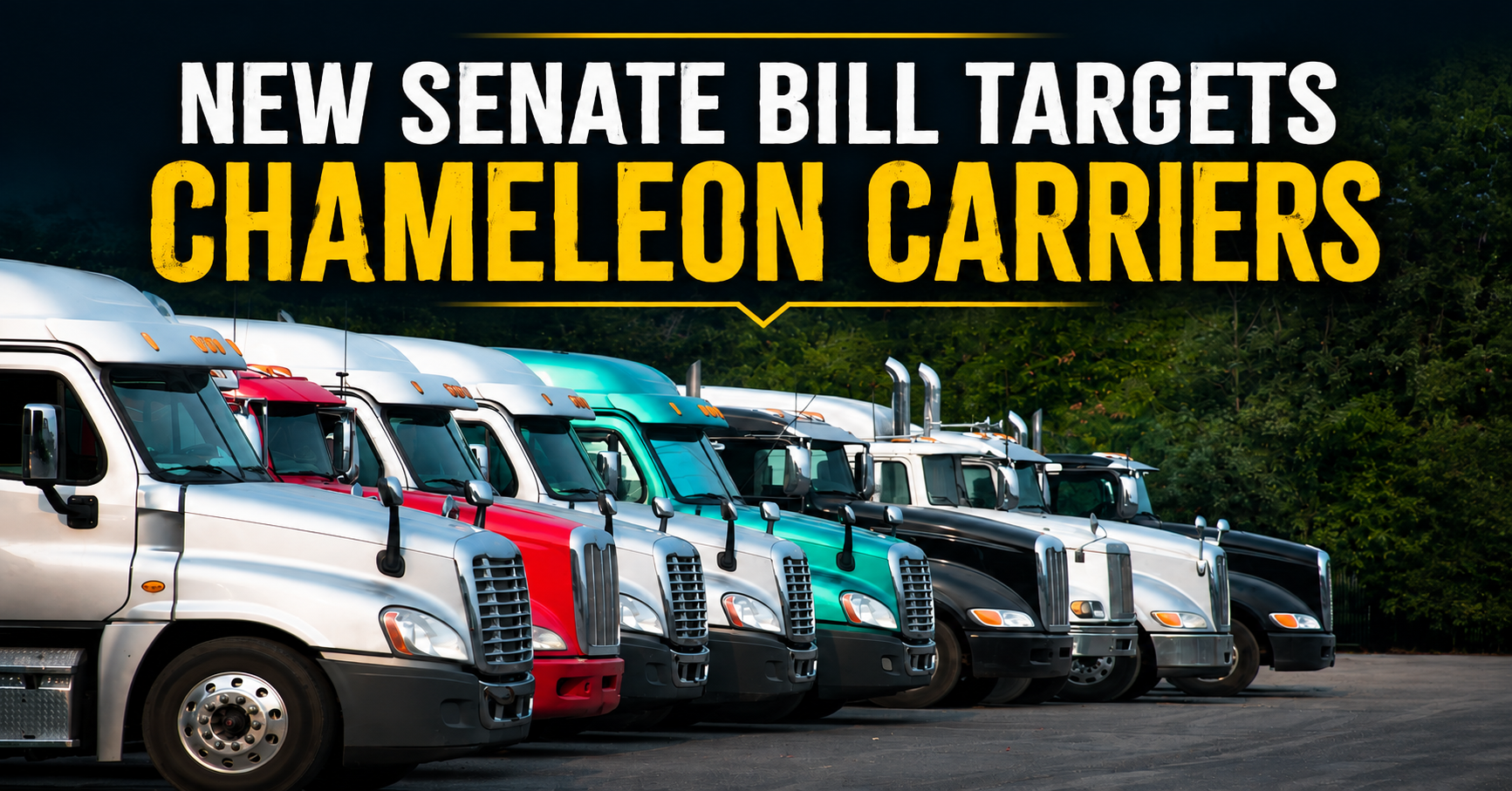
Food manufacturers, distributors and retailers could face tighter scrutiny of the motor carriers moving their products under bipartisan legislation aimed at keeping unsafe trucking operators from reentering the market under new identities.
U.S. Sens. Todd Young, R-Ind., and Andy Kim, D-N.J., introduced legislation late last month targeting trucking companies that reopen under new identities. The bipartisan Safety and Accountability in Freight Enforcement Act aims to stop operators from escaping enforcement through fresh registrations. Trucking industry observers call these businesses “chameleon carriers.” The proposal now awaits Senate committee action.

The bill focuses on companies that close after safety violations, penalties, insurance problems, or enforcement actions. Those operators can later seek another USDOT number under a different business structure. Lawmakers want the Federal Motor Carrier Safety Administration (FMCSA) to identify those connections before approving registration applications. The measure also covers brokers, freight forwarders, and intermodal equipment providers.
FMCSA Role: Screening for Identity Links
The SAFE Act directs FMCSA to develop and test an automated tool specifically to detect chameleon-carrier applications during the USDOT registration process. Final decisions would remain with FMCSA employees, not automation. Applicants could appeal an incorrect flag and receive a review after correcting their submission.
The tool would look for common ownership, managers, drivers, equipment, addresses, phone numbers, emails, and operating facilities. It would also examine insurance continuity, lapsed coverage, transferred assets, inactive USDOT numbers, and company formation dates. Those details could show whether a new applicant continues a previous operation. FMCSA could use the findings when deciding whether to approve registration.
 The legislation comes as FMCSA Administrator Derek Barrs has made identifying chameleon carriers an agency priority. Earlier this year, Barrs said FMCSA needs to unmask chameleon carriers and described the issue as a “front door problem,” arguing that regulators need to stop problematic operators before they enter the federal registration system.
Senator Young framed the proposal as a road-safety measure. “When unsafe trucking companies evade enforcement by reopening under a new identity, everyone who shares the road faces risk," Young stated. Kim described the legislation as a way to address operators who skirt regulations. He stated that those actions “can cost people’s lives.”
Making Progress By Measuring the Problem
The SAFE Act would require the Government Accountability Office (GAO) to study the scope of chameleon carriers nationwide. That report would estimate their prevalence, related fatalities, serious injuries, property damage, and enforcement methods. The GAO also would review federal monitoring weaknesses and recommend improvements. According to the bill, Congress would then receive the findings within one year after enactment.
FMCSA could share information with agencies including the Justice Department, Treasury Department, Homeland Security, Postal Service, and state partners — all key stakeholder agencies that could play a role in addressing the issue. Of course, the bill requires data privacy protections during that work. DOT’s inspector general would audit the tool two years after implementation. That audit would measure flagged applications, rejected registrations, errors, redeterminations, and severe-crash reductions.
What Food Supply Chain Executives Should Watch
For food companies, the SAFE Act is more than a trucking enforcement proposal. If enacted and effectively implemented, it could influence the quality and transparency of the carrier pool available to food shippers.
Supply chain leaders should watch how FMCSA incorporates ownership, insurance, equipment, and operating-history data into carrier registration and whether that information eventually becomes useful in shipper and broker vetting processes.
The legislation also reinforces a broader risk-management principle: a valid USDOT number alone does not necessarily provide a complete picture of a transportation provider.
Food manufacturers, retailers and distributors may want to review how their organizations — and the brokers and 3PLs they use—qualify carriers, monitor changes in operating authority and insurance, and identify potentially problematic relationships between newly established carriers and previously sanctioned businesses.
For supply chains where a transportation failure can mean spoiled product, production downtime, missed retail appointments, or lost sales, better visibility into who is actually hauling the freight could have value well beyond regulatory compliance.
Related Articles:
- How to Fraud-Proof Your Food Chain
- 70th Annual Food Shippers Conference: The Economy, AI, Fraud & Theft
- Cargo Theft Surges to Record Levels
- When Food Becomes A Target: Understanding Cargo Theft
- Bipartisan Bill to Crack Down on Cargo Theft
Like this kind of content? Subscribe to our "Food For Thought" eNewsletter!

Now more than ever, professionals consume info on the go. Distributed twice monthly, our "Food For Thought" e-newsletter allows readers to stay informed about timely and relevant industry topics and FSA news whether they're in the office or on the road. Topics range from capacity, rates and supply chain disruption to multimodal transportation strategy, leveraging technology, and talent management and retention. Learn More