

by Staff, on Oct 27, 2026
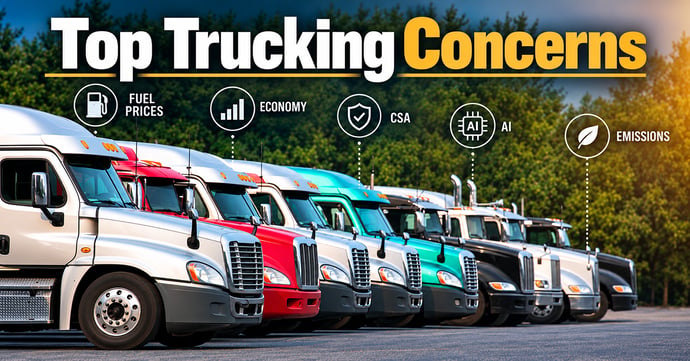
Just as the trucking industry began seeing encouraging signs of an improving freight economy, another challenge emerged: a sharp increase in diesel fuel prices. Combined with persistent operating costs, regulatory concerns and workforce pressures, these challenges are shaping the priorities of motor carriers and their food shipper customers in 2026.
The American Transportation Research Institute (ATRI), the trucking industry's not-for-profit research organization, recently released its 22nd annual Top Industry Issues report, identifying the most pressing concerns facing the industry. Representatives from ATRI regularly speak at the annual Food Shippers Conference.
This year's findings highlight a combination of familiar challenges and emerging issues. Fuel prices; lawsuit abuse reform; compliance, safety, accountability (CSA); and insurance cost/availability remain significant concerns. Meanwhile, two issues that first appeared among the industry's top 10 in 2025 continue to command attention: Artificial intelligence (AI) in trucking and diesel emissions regulations.
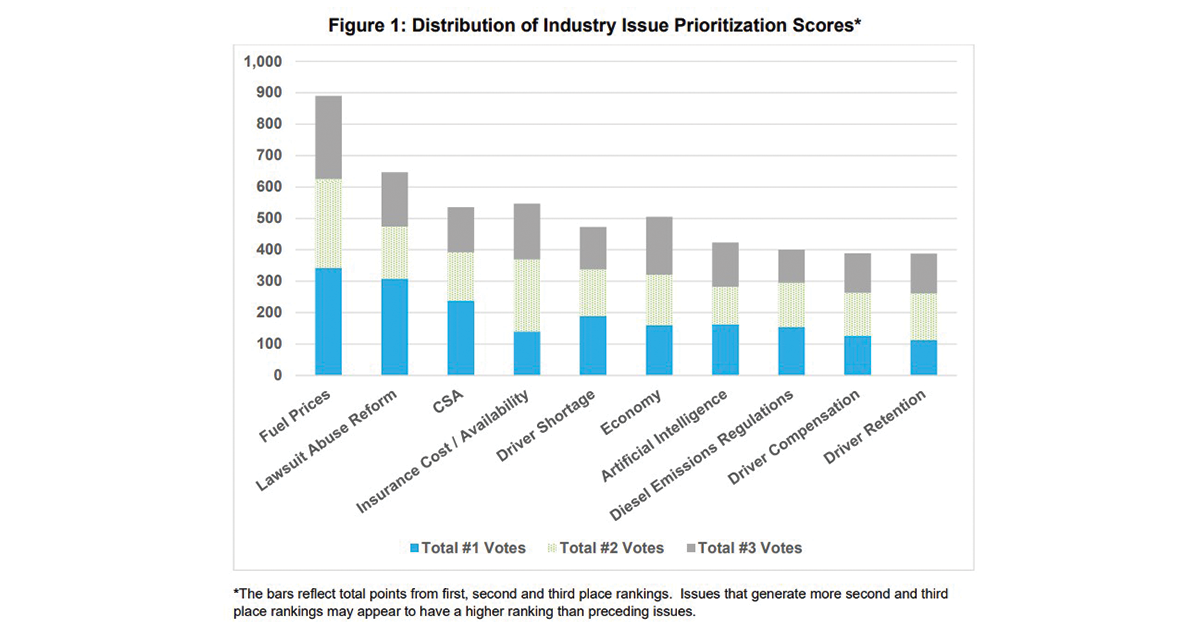
 “Despite the economy dropping to the #6 issue overall, the headwinds facing carriers are real and significant," says Rebecca Brewster, ATRI’s President and COO. "Three of the top five directly impact carriers’ bottom lines – fuel prices, the need for lawsuit abuse reform, and insurance cost and availability – making it more critical than ever that our shipper partners across the supply chain work with their carriers to mitigate these challenges.”
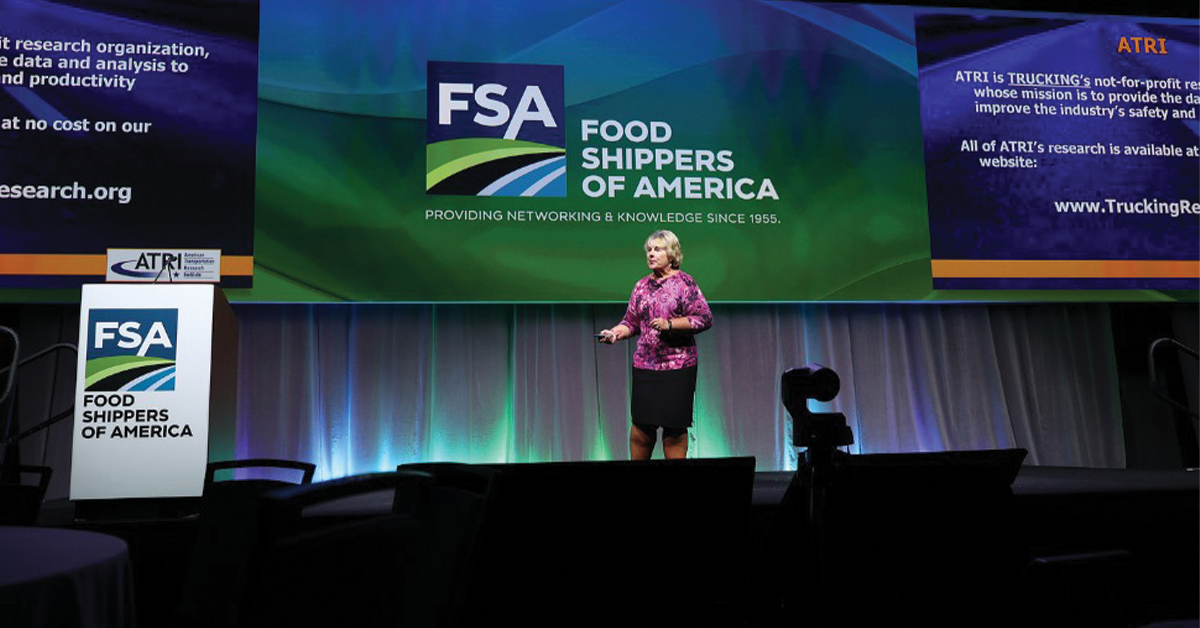 Rebecca Brewster, President & COO of ATRI, explains the trucking industry’s top concerns at the 70th annual Food Shippers Conference this past March.
Rising Fuel Prices Add Pressure
For trucking companies already operating on tight margins, higher diesel prices are creating additional financial strain.
“Just as we started to see some positive signs in the freight economy, the cost of diesel topped $6.50 per gallon,” says Ben Banks, President of TCW. “With operating costs continuing to climb overall, this spike in fuel costs is particularly painful for small to mid-size fleets. ATRI’s annual analysis is so essential for trucking to not only quantify the issues, but more importantly, to understand what we can collectively do as an industry to address each.”
For food shippers, these cost pressures are particularly relevant because transportation expenses directly influence supply chain budgets, freight procurement strategies and relationships with motor carriers.
Economic Optimism, But Workforce Concerns Return
One of the more notable findings in this year's report is the changing perception of the economy.
After ranking as the industry's number one concern for three consecutive years, the economy dropped to sixth place in 2026. This shift suggests cautious optimism among motor carriers about improving freight market conditions.
However, as economic concerns eased somewhat, workforce challenges regained prominence.
The driver shortage returned to the top 10 at number five, while driver compensation ranked ninth and driver retention rounded out the list at number 10.
These findings reinforce the importance of attracting, developing and retaining qualified professional drivers—an ongoing priority for carriers and the shippers that depend on reliable transportation capacity.
Different Perspectives Across the Industry
Nearly 3,100 trucking industry stakeholders participated in ATRI's annual survey, providing perspectives from across the freight transportation community.
Motor carrier executives and personnel accounted for more than 48% of respondents, while professional truck drivers represented 26%. The remaining 26% included industry suppliers, driver trainers, law enforcement personnel and other freight stakeholders.
Interestingly, the survey revealed differences in priorities between motor carriers and professional drivers.
Professional truck drivers identified their three leading concerns as:
- Fuel Prices
- Truck Parking
- Driver Compensation
Motor carriers ranked their top three concerns as:
- Lawsuit Abuse Reform
- Fuel Prices
- Driver Shortage
These differences underscore how industry challenges can affect stakeholders in distinct ways. While carriers focus heavily on business costs, legal exposure and workforce availability, drivers place significant emphasis on their daily operating expenses, access to safe parking and compensation.
The report also examined concerns among law enforcement personnel, who identified electronic logging device (ELD) fraud as their top issue.
Emerging Issues Remain on the Radar
Technology and regulatory developments are also influencing the industry's priorities.
AI in trucking and diesel emissions regulations both made their first appearances on ATRI's top 10 list in 2025 and remained among the leading concerns in 2026.
Their continued presence reflects the industry's growing focus on how emerging technologies and evolving regulatory requirements could affect fleet operations, equipment investments and long-term business strategies.
What the Findings Mean for Food Shippers
For food manufacturers, retailers and distributors, ATRI's findings provide valuable insight into the pressures facing their transportation partners.
Rising fuel and insurance costs, driver availability, compensation expectations and regulatory uncertainty can influence transportation pricing, service reliability and capacity planning.
Understanding these challenges can help food shippers strengthen carrier relationships, anticipate potential disruptions and develop more resilient transportation strategies.
Related Articles:
- Quality of Life Themes Dominate ATRI’s Recent List of Critical Trucking Issues
- Top Trucking Challenges Identified by ATRI
- Trucking Costs Reach Record High as Carriers Continue to Feel the Squeeze
- When Food Becomes A Target: Understanding Cargo Theft
- 70th Annual Food Shippers Conference: The Economy, Collaboration, AI, Fraud & Theft
Like this kind of content? Subscribe to our "Food For Thought" eNewsletter!

Now more than ever, professionals consume info on the go. Distributed twice monthly, our "Food For Thought" e-newsletter allows readers to stay informed about timely and relevant industry topics and FSA news whether they're in the office or on the road. Topics range from capacity, rates and supply chain disruption to multimodal transportation strategy, leveraging technology, and talent management and retention. Learn More