
by Brian Everett, on Aug 25, 2026
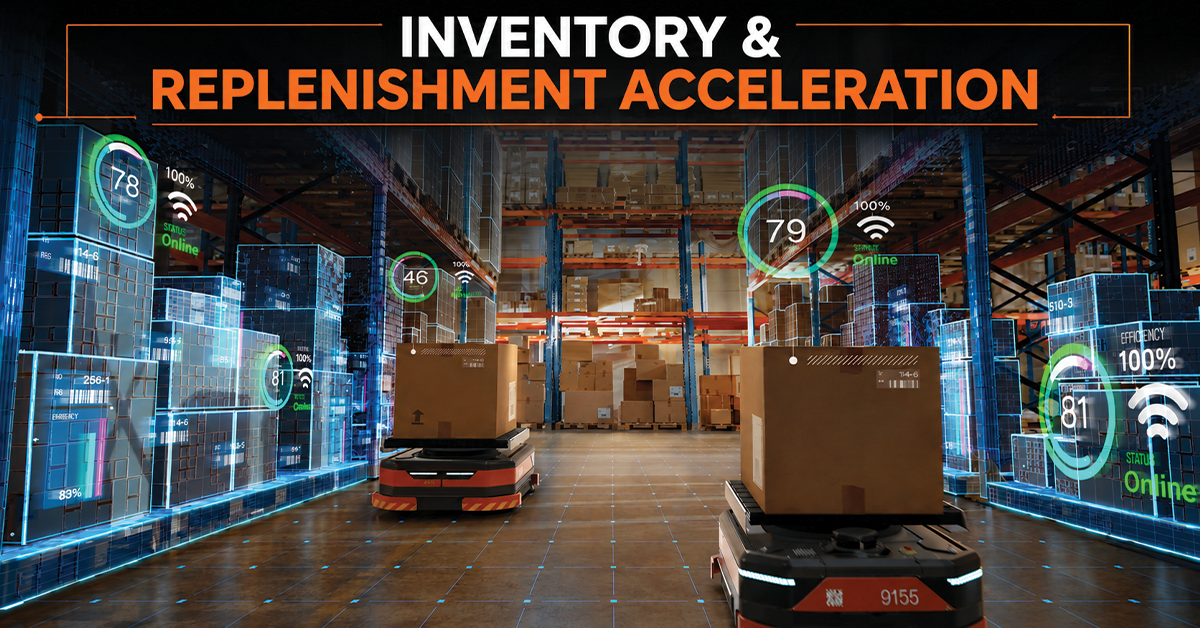
For food manufacturers and retailers, speed has become a competitive advantage. With consumer demand shifting rapidly, shorter product life cycles, and continued pressure to reduce waste, food shippers are rethinking how they manage inventory and replenish products across their supply chains.
Rather than relying on traditional forecasting methods, leading food brand are investing in technologies and processes that provide greater visibility and enable faster, more accurate decision-making.
Focus on Real-Time Visibility and Automation
Many food shippers are implementing cloud-based inventory management systems that provide real-time visibility into inventory levels across plants, warehouses, and distribution centers. This allows supply chain teams to identify shortages sooner, rebalance inventory across locations, and respond quickly to changing customer demand before disruptions occur.
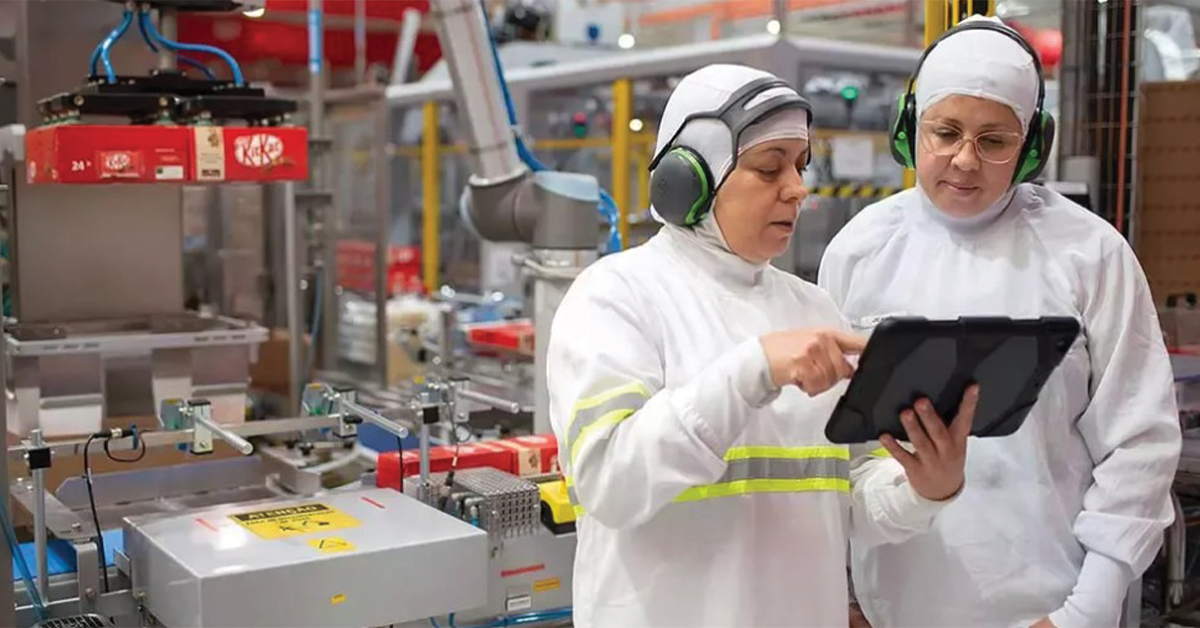
For example, Nestlé has migrated its core operations to SAP's cloud platform to create a more agile and resilient global digital infrastructure. The company says it’s upgrading its digital core, based on SAP technology, to increase speed, innovate smarter and deliver results quicker.
This will enable AI and automation at scale to provide better insights and improve decision-making and processes across the company, according to company officials. It also makes the company more efficient and helps it roll out new products globally faster to meet the needs of our customers and consumers
Nestlé has more than 2,000 brands, ranging from Nescafe, KitKat, Purina, and Maggie, sold in 185 countries around the world, with 335 factories in 75 countries. This makes the major food company’s operations as large as its supply chains are complex.
 "We are building a future-ready enterprise - one that works smarter and faster,” says Chris Wright, Chief Information Officer at Nestlé. “Having a common ERP system as our backbone is already a tremendous advantage for Nestlé. It provides a unified platform and data foundation that allows us to execute end-to-end and have visibility across our entire company and beyond. With the upgrade, we gain more flexibility, capabilities and insights that will help us roll out new products globally faster to meet the needs of our customers and consumers. And with the use of AI and automation at scale, we'll drive efficiency and effectiveness, throughout our value chain."
Examples of what the upgrade at Nestlé will further improve:
- Next-generation intelligent order fulfillment for retail customers in-store and online, matching supply with demand in real time. With greater reliability and flexibility, it will ensure shoppers always find the products they want, when and how they want them.
- Real-time, data-driven decision-making for consistency across reporting and planning processes.
- Automated and standardized procurement processes in the cloud across global operations, meaning real-time spend visibility and significant cost savings.
Fast, Efficient Inventory Replenishment
Starbucks Coffee Co., which has a global footprint of more than 41,000 company-operated and licensed coffeehouses, is testing a 24-hour operating model while scaling daily delivery efforts to improve speed, availability and reliability in its supply chain, per a July 29 earnings call.
 Through the 24/7 system, the coffee company aims to build a platform that can create pull-through in the supply chain and replenish inventory within 24 hours so “we’re never out of stock,” says CEO Brian Niccol.
The effort is expected to reduce the back of house operations and ensure Starbucks has the “right inventory at the right location at the right time,” says Niccol.
Starbucks is testing out new methods to optimize inventory management and create a more efficient and modern supply chain. According to Niccol, new technology, including inventory ordering systems, will be a critical part of the company’s strategy in fiscal 2027.
The coffeehouse company’s latest initiative comes after it deployed an artificial intelligence-powered counting tool last year to help employees keep better track of in-store stock. The tech, which used computer vision and 3D spatial intelligence, aimed to automate aspects of inventory counting, with the intention of later automating some restocking orders.
However, nine months later, Starbucks decided to cease operations of the computer vision inventory counting system as employees claimed it was unreliable. Instead, the coffeehouse is opting for a single process across all inventory counts to support accuracy.
Last year, the coffee chain also trimmed its SKUs by 30% by removing a significant selection of less-popular beverages and foods from its menu. The company made the move to help improve quality and consistency, reduce wait times, and ultimately simplify its supply chain.
Automation Speeds Replenishment
Warehouse automation also is playing an increasingly important role. Automated storage and retrieval systems, robotics, and warehouse management software enable faster picking, packing, and shipping while reducing labor requirements. These technologies shorten replenishment cycles and improve order accuracy — especially for high-volume or perishable products.
For example, Amazon Supply Chain Services is leveraging next-level tech to enhance its systems for a better customer experience — from first mile to last. Amazon’s operational systems contribute to successfully delivering more than 13 billion items each year. The company delivers this reliability at scale, with a 96.4% average on-time delivery rate for all multichannel fulfillment orders, and an undamaged package rate of 99.9%.
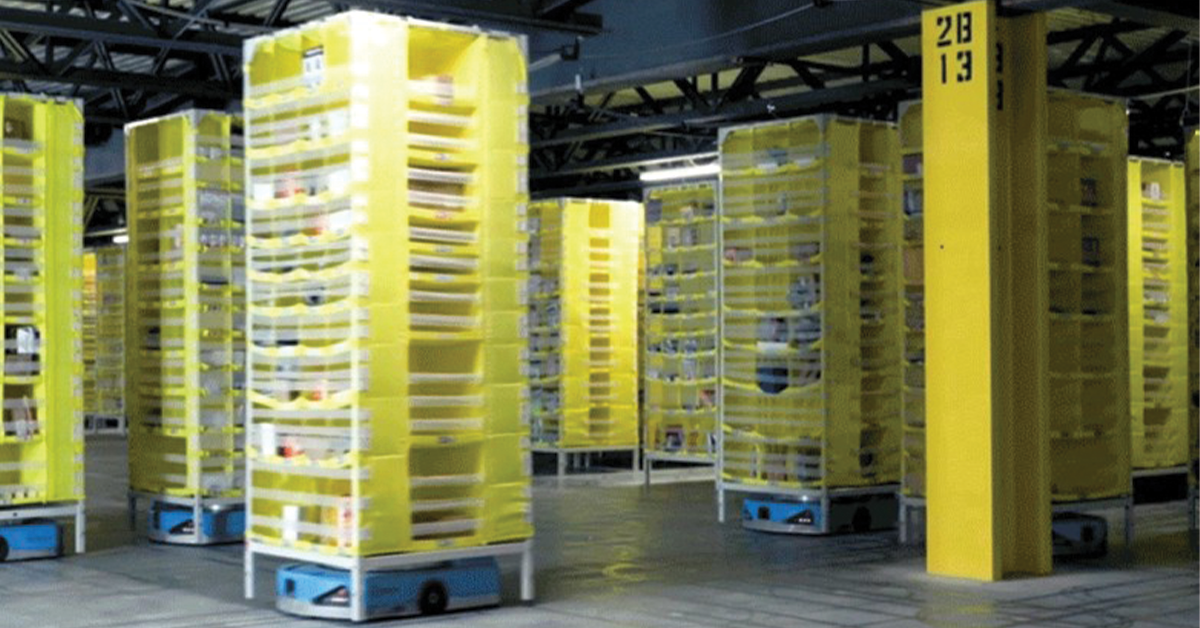
It’s become a core differentiator in enabling Amazon to offer faster, more reliable end-to-end logistics solutions and an unmatched customer experience.
Amazon takes an intentional approach that pairs automation with human judgment — not one that replaces it. People and performance technology work together to bring care and precision to every step of the pick, pack, and ship process. This innovative approach is available to all businesses and sales channels through Amazon Supply Chain Services (ASCS) — bringing the same logistics network and technology fueling Amazon to help simplify operations, boost efficiency, and scale with confidence.
Amazon also takes an usual approach to robotics fulfillment, as evidenced in a newly opened robotics fulfillment centers.
Here are just a few ways in which Amazon is speeding replenishment through near-perfect orchestration and accuracy:
- Fulfillment Efficiency: Amazon deploys more than one million robots to dynamically move inventory around the warehouse, delivering items right to employees on mobile shelves, limiting employee time spent walking to different areas of the facility, and reducing physical strain. Robotics also helps to shave off the total time spent fulfilling an order, sometimes up to fifteen seconds per item, which is considerable when you factor in Amazon’s delivery of over 13 billion items each year.
- Order Optimization: High-tech systems coupled with human intelligence fine-tunes everything from box size to tape length. Even carrier type is determined by the ideal balance of cost and speed to ensure on-time delivery. Machine learning mechanisms paired with hands-on quality checks drive better order accuracy, meaning fewer damaged items, fewer mispacks, and fewer returns.
More Factors Toward Improved Inventory Management & Replenishment
Food companies also are also sharing more data with suppliers, distributors, and retailers through integrated planning systems. By collaborating on inventory levels, production schedules, and transportation plans, partners can anticipate disruptions, improve replenishment timing, and keep products moving efficiently from manufacturing facilities to store shelves.
Given perishable products can be at the heart of any food company’s offerings, inventory speed also is essential. Food shippers are using shelf-life tracking, lot-level traceability, and first-expired, first-out (FEFO) inventory practices to ensure products are distributed before expiration while minimizing food waste. Faster inventory turnover also helps improve freshness and customer satisfaction.
Today's leading food brands recognize that faster inventory management isn't simply about moving products more quickly, it's about making smarter decisions. By combining real-time data, AI-driven forecasting, automation, and closer collaboration with supply chain partners, companies are improving replenishment speed, reducing waste, increasing service levels, and building more agile supply chains capable of responding to an increasingly dynamic marketplace.
Related Articles:
- Emerging Trends in Supply Chain Visibility
- HelloFresh Expands Temp-Controlled SKU Capacity 5X Across Brand Portfolio
- Target’s New Receive Center: More Supply Chain Capacity for Reliability
- Sam’s Club: Artificial Intelligence in Supply Chain
- Massive Growth in Warehouse Automation Expected in Next Three Years
Like this kind of content? Subscribe to our "Food For Thought" eNewsletter!
Now more than ever, professionals consume info on the go. Distributed twice monthly, our "Food For Thought" e-newsletter allows readers to stay informed about timely and relevant industry topics and FSA news whether they're in the office or on the road. Topics range from capacity, rates and supply chain disruption to multimodal transportation strategy, leveraging technology, and talent management and retention. Learn More