
by Brian Everett, on Jul 17, 2026
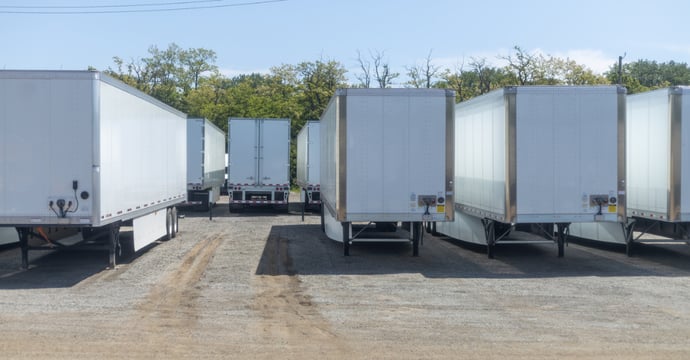
Trailer industry optimism is on the rise, according to this month’s issue of ACT Research’s State of the Industry: U.S. Trailers report — with equipment order intake improving, freight rates increasing, policy impacts becoming clearer.
In fact, the ACT Research preliminary results for May show 20,189 units above April and even above the 10-Year average. U.S. trailer orders came in well above prior-year results, rising 237% despite the historically slower conditions expected for May.
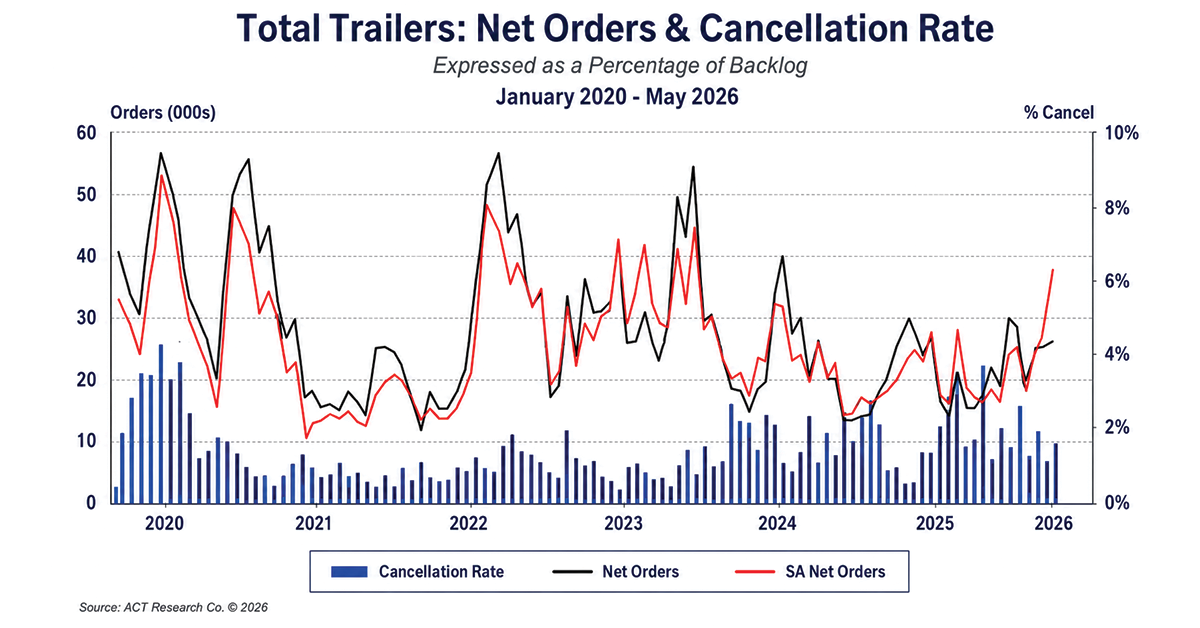
 “Counter to cyclical expectations, net order intake in May increased from April, albeit by just 7.6%, logging 20.9k orders placed this month, and although it may seem like it’s been a while, one only needs to go back to this past January to find another 20k+ net order intake,” says Jennifer McNealy, Director–CV Market Research & Publications at ACT Research. “Compared to May 2025, net orders vaulted more than 240% over the lackluster intake of 6.1k last year. May’s cancellation rate of 1.9%, as a percentage of backlog, remained in ‘elevated’ territory, inching a tad higher from the 1.4% rate recorded in April. Like last month, high cancellations were reported in most segments, meaning the situation was broad-based.”
Net orders have now outpaced build for four of the five months in 2026, according to McNealy: “In May, about 4.1k more trailers were ordered than built, growing the backlog by more than 5% m/m. However, this was not enough to pump much lifeblood into the anemic backlogs. It appears the end of the road is in sight, but there is a little more traveling to do before the industry is again standing in the sunlight of healthier times.”
ACT Research reported preliminary net data showing orders surged over tepid prior-year results to 20,700 units. They also were 7% above April. The report noted that a sequential drop in net orders typically is expected, with May traditionally marking the second-weakest order month of the annual cycle. But ACT also suspects the current cycle has been delayed a few months.
In its last two reports, ACT Research has questioned whether more high-side surprises in order intake would happen, or whether traditional Q2 order weakness would prevail, given accelerating freight rates and rising carrier confidence. But this also came as fleet decision-makers continued to hesitate about placing trailer orders while accelerating tractor purchases.
Based on the May data, industry observers indicate there was at least one more month of improved order intake in the pipeline, but it remains to be seen how the final month of Q2, as well as how Q3, will unfold.
Trailer production levels also can tell a slightly different story. For example, FTR reported U.S. trailer builds fell 6% month over month in May to 16,553 units and were down 1% compared to the same month year-over-year. Year-to-date production in May was essentially flat at 79,482 units.
The fact that orders continue to outpace production suggests trailer manufacturers continue to remain hesitant to significantly ramp up manufacturing despite stronger demand signals.
Trade policy uncertainty is also clouding the outlook—driven by growing cost pressures, including higher steel tariffs under Section 232 and the prospect of additional anti-dumping and countervailing duties on imported van trailers and trailer components.
What Could Surge in Trailer Orders Ultimately Mean to Food Shippers?
For food manufacturers and grocery retailers that operate private fleets, this development could signal much more than a rebound in trailer manufacturing. It may indicate improving confidence in freight demand, greater equipment availability, and a more favorable environment for fleet investments after several years of supply chain disruption.
It also could be an indicator of the following:
Greater Equipment Availability Could Accelerate Fleet Modernization. Many food companies delayed trailer purchases during periods of long lead times and production constraints. A strengthening order environment suggests manufacturers have more capacity and buyers may find improved availability for replacing aging refrigerated and dry van trailers.
New equipment purchased could ultimately result in reduced maintenance costs, improved food safety and cold-chain reliability, better fuel efficiency through lighter-weight equipment, and access to newer technologies.
For example, Walmart has announced ongoing investments in its private fleet, including new refrigerated trailers, as part of broader efforts to modernize its transportation network and improve supply chain efficiency. Sysco has periodically announced investments in fleet modernization that include refrigerated trailers equipped with newer refrigeration technologies, telematics, and improved fuel efficiency.
Companies May Feel More Confident Investing in Private Fleets. Food manufacturers often expand trailer fleets when they anticipate stronger production volumes or customer demand. The surge in trailer orders may reflect growing confidence across the broader freight market. For food companies, additional trailers purchased could provide flexibility during seasonal demand spikes and reduce dependence on increasingly unpredictable transportation markets.
Increased Trailer Capacity Supports Supply Chain Resilience. Many food companies have spent the past several years redesigning their supply chains to become more resilient. Added trailers to their fleets can help them increase drop-and-hook operations, reduce loading dock congestion, build buffer capacity, improve customer service, and ultimately position inventory closer to key markets. Rather than simply moving freight, trailers become mobile storage assets that create operational flexibility.
Related Articles:
- Food Companies Reimagine Agile Supply Chains through Equipment Leasing
- Perspectives by Bob Costello: Economics Impact On Supply Chains
- Multi-Temp Trailers Boost Efficiency for Food Shippers
- Private Fleets Poised for More Growth
Like this kind of content? Subscribe to our "Food For Thought" eNewsletter!

Now more than ever, professionals consume info on the go. Distributed twice monthly, our "Food For Thought" e-newsletter allows readers to stay informed about timely and relevant industry topics and FSA news whether they're in the office or on the road. Topics range from capacity, rates and supply chain disruption to multimodal transportation strategy, leveraging technology, and talent management and retention. Learn More