

by Brian Everett, on Jun 02, 2026

Becoming a “shipper of choice” has quickly shifted from a nice-to-have distinction to a competitive necessity in food supply chains.
In a market where capacity tightens, expectations rise, and disruptions are constant, the shippers that earn preferred status with motor carriers, truck brokers, 3PLs, railroads and maritime players are the ones that secure the best service and often the best rates.
 “At its core, becoming a shipper of choice isn’t about perks alone,” says Mike Regan, Chief Relationship Officer and Co-Founder, TranzAct Technologies, Inc. “It’s about building trust through consistency, clarity, and transparency.”
Start with Transparency and Accurate Information
“What is important is a different kind of AI, and that’s ‘Actionable Information,’” says Regan.
That’s because transportation and logistics partners make decisions based on the information shippers provide. When that data is incomplete, unreliable or inaccurate whether it’s inaccurate weights, unclear pickup windows, or last-minute changes — it creates inefficiencies that ripple across operations. Companies become “shippers of choice” by prioritizing timely and accurate data, from the initial RFP that engages their partners through the life cycle of the partner relationship. They invest in systems and processes that ensure load details, facility requirements, and scheduling information are accurate from the outset. This reduces friction, minimizes costly surprises, and signals to partners that their time and assets are respected.
 “As you go through the RFP process, make sure you’re providing accurate information around volumes,” advises Craig Paulsen, Vice President of Commercial Development - Intermodal with Schneider: “We’re putting together solutions based on those volumes. If you elevate that forecast or go light, that can cause problems. As your provider, we understand that things happen over the course of the year but starting out with information that is most accurate gives us a chance to develop the best solution that works.”
Define Expectations, Communicate Change
Strong partnerships depend on alignment. That means clearly articulating expectations around service levels, appointment compliance, dwell times, and performance metrics. Just as important is how changes are handled. In the food industry, seasonality, promotions, and supply fluctuations are inevitable. Shippers that proactively communicate shifts in volume, routing, or timing give their partners the ability to plan and respond effectively. The earlier and more clearly you communicate, the more likely your partners can deliver the consistency you need. Some shippers go above and beyond to help their logistics partners understand their needs.
 “For example, we changed a pretty big piece of business in southwest Missouri over the last 18 months,” says Peter Andrews, Director of Transportation with Schreiber Foods. “Very complex and very just-in-time to support production distribution in that region. To help educate our carrier partners participating in this opportunity, we took them all around those facilities to make sure they saw how those facilities operate and to identify any unique needs and challenges.
Had we not gone through that exercise, we would be having tough conversations about things they wouldn’t have accounted for - so getting to that level of intimacy is absolutely critical.”
Shippers also recommend to lead with honesty when challenges arise. No supply chain runs perfectly — delays, shortages, and disruptions happen. What separates a Shipper of Choice from other shippers is how those moments are handled. Being open and honest, rather than reactive or opaque, can build credibility. If a facility is backed up, say so. If volumes are dropping or surging unexpectedly, share that reality. Transparency during challenges allows carriers, brokers and 3PLs to adjust, collaborate on solutions, and maintain service levels. Over time, this kind of honesty strengthens relationships far more than trying to mask issues.
Building Long-Term Advantage
Ultimately, becoming a Shipper of Choice is about making it easier, and more attractive, for partners to do business with you. When carriers and logistics providers trust your information, understand your expectations, and feel included in problem-solving, they’re more likely to prioritize your business. In a competitive supply chain landscape, that preference can be the difference between scrambling for capacity and having reliable, high-quality partners at the ready.
For food shippers, the path forward is clear: prioritize transparency, communicate proactively, and operate with honesty. Do that consistently, and “Shipper of Choice” becomes less of a label — and more of a lasting advantage.
 “General Mills has always been known as a very strategic shipper,” says Mark Purdy, Director of North American Transportation with General Mills. “And it is something that when you think about winning together, creating that win-win culture, it’s a legacy that General Mills has created long before me. Once we sold to the C-suite the importance of being a strategic partner with our providers, it allows us all to be more successful because you get the right capacity, on the right freight, with the right type of partnership characteristics. And then we all win together.”
While becoming a shipper of choice is a critical strategy, other supply chain executives concede you need to strike a balance on difficult challenges shippers must navigate. A panel of shippers discussed the “elephants in the room,” ranging from replacing provider incumbents and changes in fuel surcharges to extended payment terms and how shippers assess rates in light of CSA alerts, equipment age, insurance, and trailer pools.
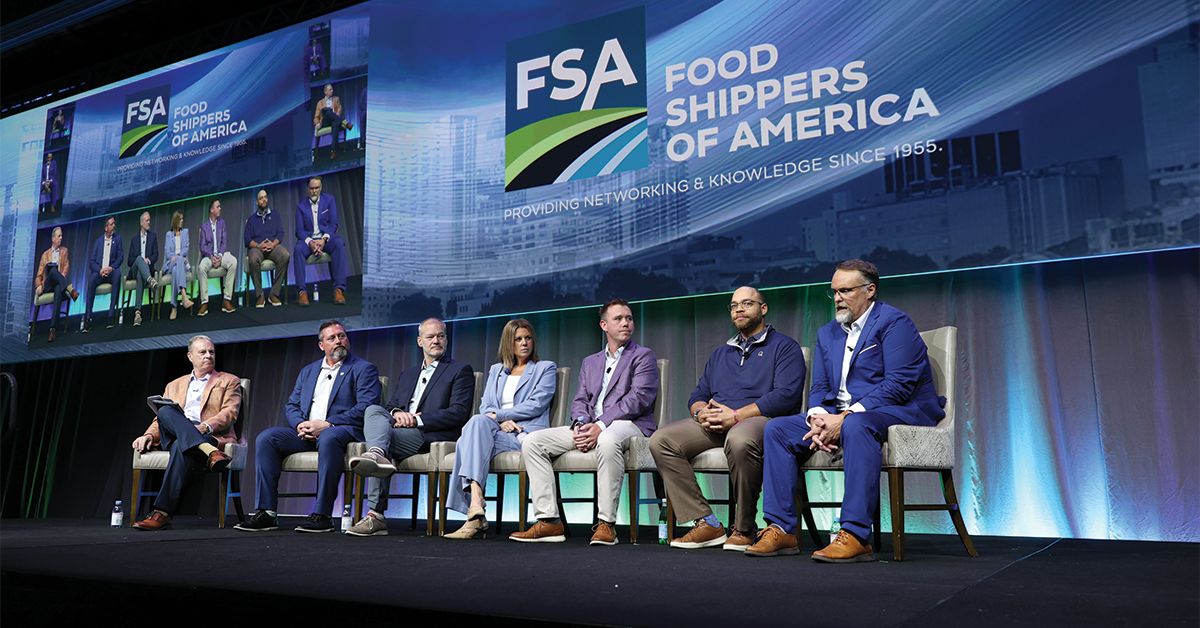 Participants on the “Know Your Shipper” panel at the 2026 Annual Food Shippers Conference included moderator Thom Albrecht, Chief Revenue Officer, Reliance Partners; Peter Callagy, Senior Manager of Transportation, Seaboard Foods; Jim Carver, Senior Director of Supply Chain, Michael Foods; Meghan Charboneau, Director of Transportation, Mars; Scott Haldeman, Director of Transportation, The Marzetti Company; Robert Morris, Senior Director Transportation, WK Kellogg Co.; and Mike Schwersenska, Vice President of Transportation, Brakebush Transportation.
Related Articles:
- 70th Annual Food Shipper Conference: The Economy, Collaboration, AI, Fraud & Theft
- How to Become a Shipper of Choice to Gain a Competitive Edge
- How to Leverage Provider Collaboration to Improve Logistics Productivity
- Become a Shipper of Choice by Offering Truck Drivers Access to Facilities
Like this kind of content? Subscribe to our "Food For Thought" eNewsletter!

Now more than ever, professionals consume info on the go. Distributed twice monthly, our "Food For Thought" e-newsletter allows readers to stay informed about timely and relevant industry topics and FSA news whether they're in the office or on the road. Topics range from capacity, rates and supply chain disruption to multimodal transportation strategy, leveraging technology, and talent management and retention. Learn More