
by Brian Everett, on Jan 07, 2026
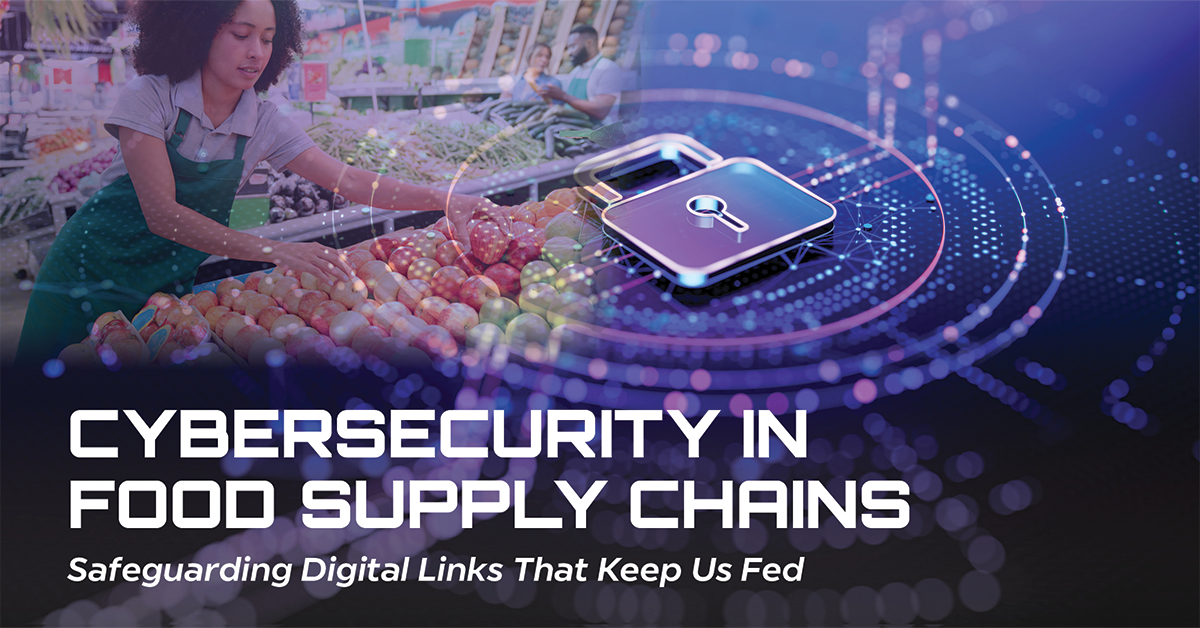
Food supply chains historically were primarily defined by physical assets — trucks, warehouses, cold storage facilities, and production lines. Today, they are just as reliant on digital networks and data systems as they are on forklifts and pallets. This increasing reliance on technology — from connected IoT sensors in warehouses to AI-powered demand forecasting — makes food companies more vulnerable to cyber threats than ever before.
Why Food Supply Chains Are Attractive Targets
Food supply chains are vast, interconnected, and essential. A single disruption can ripple across retailers, restaurants, and households in a matter of days. Cybercriminals know this.
According to recent reports, ransomware attacks on food and agriculture companies have surged, with threat actors seeing these businesses as “critical infrastructure” that are likely to pay quickly to minimize disruptions. In fact, there was a 27% uptick in ransomware attacks on the U.S. food and agri sector in 2024, with 212 attacks recorded compared to 167 in 2023, according to the Food and Agriculture-Information Sharing and Analysis Center.
In June 2025, United Natural Foods, Inc., a major food distributor, identified unauthorized activity on internal networks and proactively took certain systems offline to investigate and resolve the issue. While the incident was quickly contained, the disruptions affected its ability to fulfill and distribute orders, which led to downstream effects, such as delays or empty shelves in certain stores.
In November 2024, Ahold Delhaize USA disclosed a ransomware/data-breach potentially affecting a significant number of individuals in its operations. According to the company, affected individuals include certain current and former employees, their dependents and beneficiaries and others whose personal information was identified in the relevant internal business files. While the company quickly took steps to assess and mitigate the issue, the breach ultimately involved personal data across its U.S. business (e-commerce, pharmacies), prompting notifications, potential costs for remediation, regulatory risk, and reputational damage. Upon detection last November, the company says it began taking steps to assess and contain the issue, including working with external cybersecurity experts to investigate and secure the affected systems, and has taken steps to further protect its systems in the aftermath of the issue.
Even as leading food companies have managed to successfully overcome such major cyberattacks, the growing threat underscores the urgent need to understand vulnerabilities and put strong defense strategies in place to protect the supply chain.
Mitigating the High Stakes of a Security Breach
A successful cyberattack on a supply chain can lead to spoiled inventory, delayed deliveries, lost sales, and damaged trust with consumers and business partners. In some cases, compromised data can include sensitive formulas, pricing contracts, or even customer payment details.
Cybersecurity specialists in the food chain suggest some strategies to strengthen security in your supply chain:
- Regular risk assessments to identify system gaps and vulnerable access points.
- Stronger vendor management, requiring third parties to comply with rigorous security standards.
- Multi-factor authentication and network segmentation to reduce the risk of unauthorized access.
- Ongoing employee training so workers at every level recognize phishing attempts and cyber risks.
- Incident response planning, ensuring that if an attack happens, downtime and losses are minimized.
In addition, supply chain executives would be smart to recognize the most common potential vulnerabilities in their operations. Given recent cyberthreats involving food companies, there are three common areas that can make your supply chain most vulnerable: Legacy Systems, Third-Party Partners, and IoT Devices.
When it comes to legacy systems, many food manufacturers, retailers and distributors still rely on outdated software that lacks modern security protections. Companies should assess and prioritize risks by inventorying all legacy systems (i.e., old ERP, plant-floor equipment, warehouse control systems), identify which ones connect to the Internet or critical operations, and conduct vulnerability assessments and penetration testing.
Third-party partners: With so many carriers, truck brokers, third-party logistics providers, suppliers, and technology vendors, one weak link can compromise an entire chain.
IoT devices: Sensors, smart equipment, and connected fleets are often deployed without sufficient security protocols.
As food supply chains embrace digital transformation — AI forecasting, blockchain traceability, autonomous logistics — the stakes for cybersecurity will only rise. Companies that integrate cybersecurity into their supply chain strategies are not only protecting their operations, but also securing consumer trust and strengthening resilience in an industry where uptime is critical.
Security Perspectives from a Food Producer
 Foremost Farms is a major dairy cooperative owned by hundreds of dairy farm members in seven Midwest states. Cybersecurity to protect the supply chain is crucial to any business, but it plays a particularly important role in food manufacturing, according to Sean Asp, Vice President of Transformation and Technology at Foremost Farms.
“In the dairy industry, we work with a perishable product in constant supply – milk is always moving off the farm,” says Asp. “As a result, our eight production facilities operate 24/7, 365 days a year. Behind the scenes, a robust technological infrastructure is essential for keeping processes, privacy and production running smoothly, especially in such a fast-paced environment. A cyberbreach could disable all of it and bring Foremost Farms to a complete standstill. We have seen this already occur with many of our peers and other companies within our state.”
Any disruptions can have significant ripple effects on the entire food chain – leading to severe consequences, according to Asp: “Customers rely on our award-winning products to arrive on time and in specific formats for further processing. A hack or technology breakdown could result in food supply shortages, customer dissatisfaction and long-term business challenges.”
“In today’s digital world, everything we do leaves a digital footprint, creating opportunities for disruption and malicious activities,” says Sean Asp, Vice President of Transformation and Technology at Foremost Farms, “However, by staying cybersmart and vigilant, we can significantly reduce the risk of cyberattacks.”
Asp offers insights on significant advancements in cybersecurity in recent years - and how supply chain professionals can implement these to protect themselves online.
First, big data and artificial intelligence (AI) have been critical for Foremost Farms. Asp says his company processes more than 200 million security data points weekly, making around-the-clock protection tools essential to business success. Adding biometric security measures to multi-factor authentication (MFA), such as fingerprint and facial recognition, has significantly enhanced security at the dairy coop. These measures can be advantageous across various market segments of the food and beverage industries, not just manufacturing.
“Currently, the most important thing you can do to protect yourself at work and home is to have an MFA on your work and personal accounts,” advises Asp. “Using new biometric security technologies, such as fingerprint or facial recognition, can improve both the security and ease of use of these key MFA tools.”
Related Articles:
- When Food Becomes A Target: Understanding Cargo Theft
- Connectivity: The Key To Ready Your Supply Chain
- Cargo Theft Surges to Record Levels
- Ask Our Experts: Food Safety & Security
Like this kind of content? Subscribe to our "Food For Thought" eNewsletter!

Now more than ever, professionals consume info on the go. Distributed twice monthly, our "Food For Thought" e-newsletter allows readers to stay informed about timely and relevant industry topics and FSA news whether they're in the office or on the road. Topics range from capacity, rates and supply chain disruption to multimodal transportation strategy, leveraging technology, and talent management and retention. Learn More