

by Brian Everett, on Nov 09, 2026

 From rising freight rates and tightening capacity to regulatory uncertainty and soaring diesel costs, these are just a few factors driving today's trucking market. FSA’s Editorial Team recently caught up with Eric Starks, Chairman of FTR Transportation Intelligence, at the Women In Trucking Association’s Accelerate! Conference in Dallas. He explained what shippers and carriers should expect in 2027.
Forces Reshaping Trucking and Food Supply Chains
The trucking industry is experiencing a significant shift in market conditions, with tightening capacity, rising freight rates, and persistent cost pressures creating a dramatically different operating environment heading into 2027.
Starks outlined five major forces reshaping trucking:
1. Regulatory policies and tariffs
2. Data center development
3. Diesel prices
4. Capacity utilization
5. Freight rates
These mirrored to some degree the themes at this time last year: the tariff rollercoaster, increased inflation pressure, a collapse in truck and railcar orders, anticipated capacity tightening, and a 1.5% forecasted increase in contract rates.
His central message? Trucking companies and their food shipping customers must prepare for continued cost pressures and capacity constraints, even as some economic indicators suggest a strengthening freight market.
1. Regulatory Uncertainty and Tariffs Are Driving Up Costs
Starks described the constantly changing regulatory and trade environment as a significant challenge for trucking companies attempting to make long-term business decisions. From tariffs on truck components, steel, and aluminum to changing emissions regulations and duties on imported trailers, the cumulative effect is increasing equipment costs and complicating fleet investment decisions.
His assessment of the impact was straightforward: "Top one, higher prices. Second one, higher prices. Third one, uncertainty."
Starks pointed specifically to uncertainty surrounding federal nitrogen oxide (NOx) emissions requirements scheduled for January 2027. With regulatory details still unresolved at the time of his presentation, fleets have struggled to determine when to purchase new equipment. The uncertainty has contributed to changing truck and trailer ordering patterns as carriers attempt to anticipate future costs.
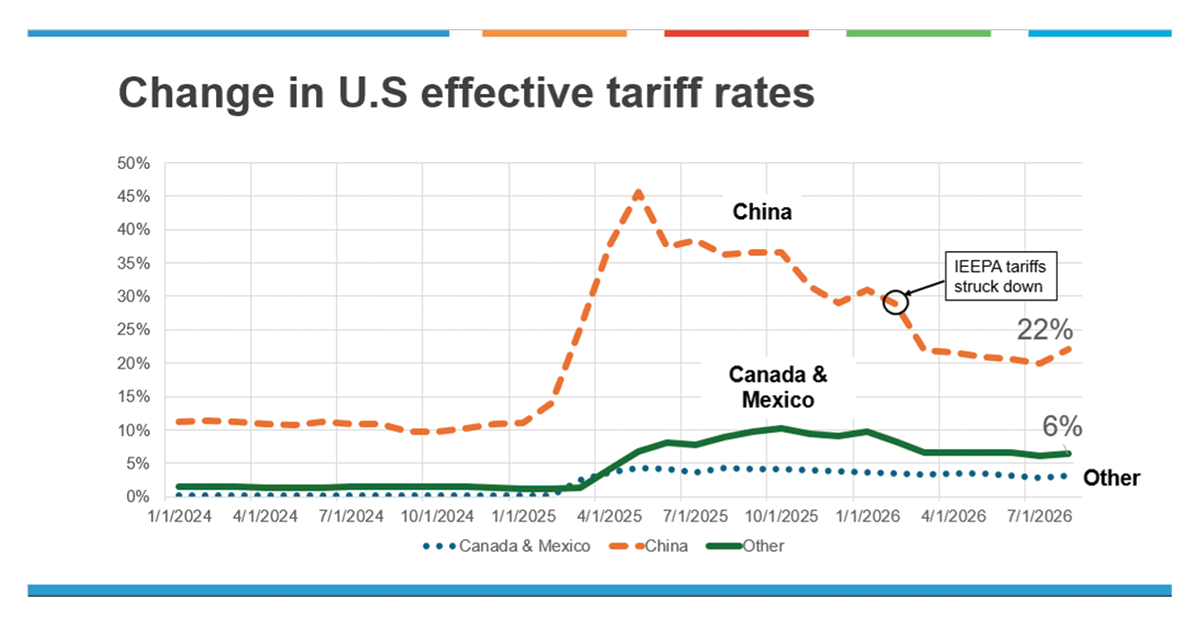
Meanwhile, tariffs are adding inflationary pressure throughout food supply chains.
 Source: FTR Transportation Intelligence
"A tariff is a tax, period," Starks explained, emphasizing that businesses importing affected products ultimately absorb additional costs.
For motor carriers, the combined effects could mean higher equipment acquisition expenses, more complicated capital planning, and continued pressure on operating margins.
2. Data Center Construction Is Creating Unexpected Freight Demand
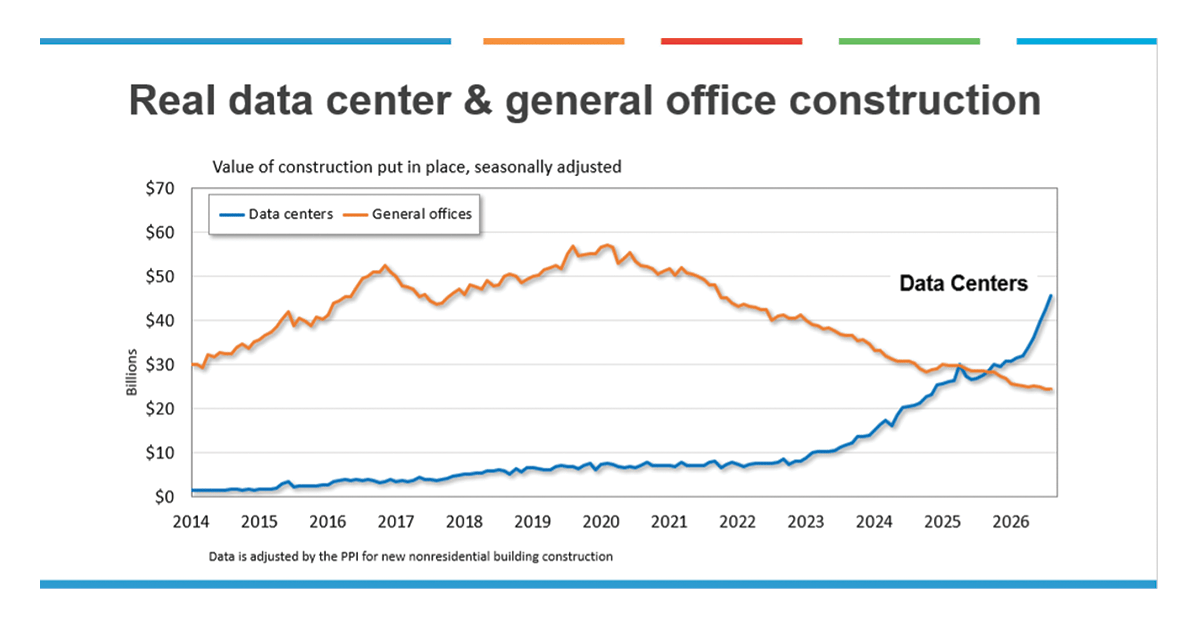
One of Starks' most compelling observations involved the extraordinary growth of data center construction, and its impact on trucking capacity.
The rapid development of facilities supporting artificial intelligence and other computing technologies is generating substantial demand for construction materials, equipment, electronics, and transportation services.
"This single-handedly has changed trucking overnight," Starks said.
He explained that data center development is supporting freight volumes that otherwise might not exist, while increasing competition for transportation equipment and drivers.
Even carriers that do not directly serve construction or technology customers are feeling the effects.
 Source: FTR Transportation Intelligence
"If that dry van is getting eaten up moving stuff over here and you need it over here, that changes what you need," he explained. It should be noted that data center construction can require temperature-controlled equipment for temperature-sensitive construction materials such as battery systems, liquid cooling systems, servers and networking equipment, as well as specialty chemicals and adhesives.
Flatbed transportation has been particularly affected, with data center construction contributing to an earlier and more dramatic tightening of capacity than in other trucking segments.
Starks expects this development activity to remain a significant source of freight demand through at least the middle of 2027, although he cautioned that continued overbuilding could eventually lead to a market correction.
3. Elevated Diesel Prices Are Adding Financial Pressure
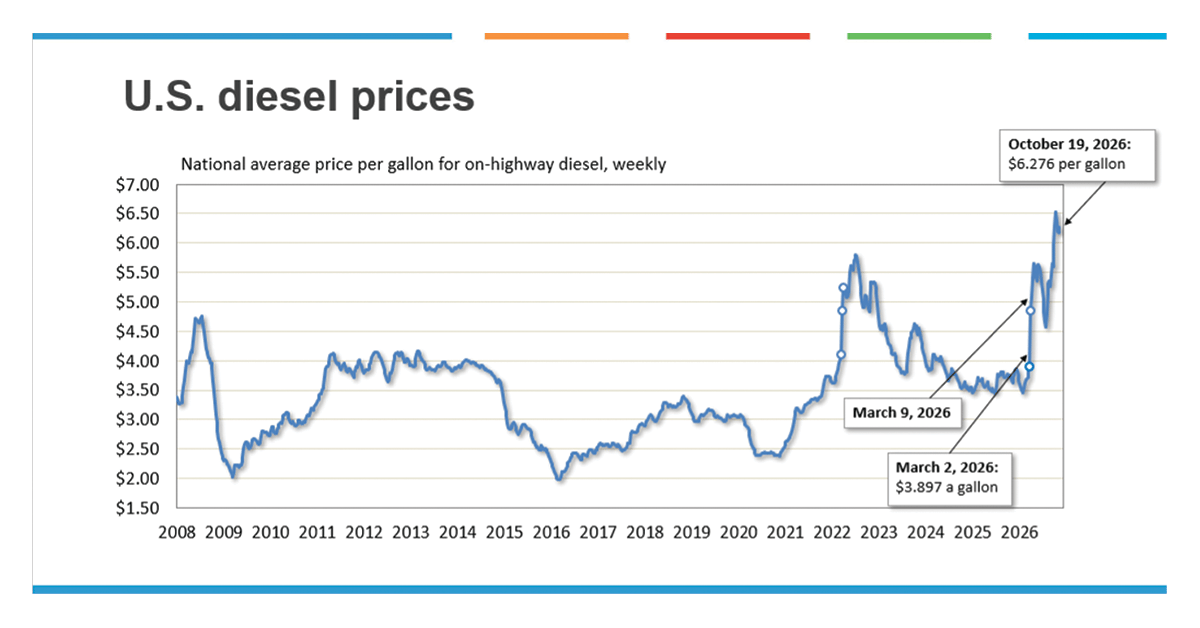
Diesel prices represent another major challenge for trucking companies, particularly as fuel costs remain elevated. Starks explained that several factors are contributing to sustained price pressure, including increased exports of distillate fuels, historically low domestic inventories, and higher crude oil prices.
Winter heating demand in the Northeast could further strain supplies because heating oil competes with diesel for the same distillate fuel resources.
"We don't see any structural stuff that shifts here that would bring that down," Starks said, indicating that meaningful relief is unlikely in the near term.
For motor carriers, effective fuel surcharge programs remain essential to protecting profitability. However, Starks emphasized that surcharges should primarily help carriers recover fuel expenses rather than serve as an additional profit source. For shippers, higher diesel prices are compounding transportation cost increases already being driven by rising freight rates.
 Source: FTR Transportation Intelligence
4. Trucking Capacity Is Tightening — But Not Simply Because Freight Is Booming
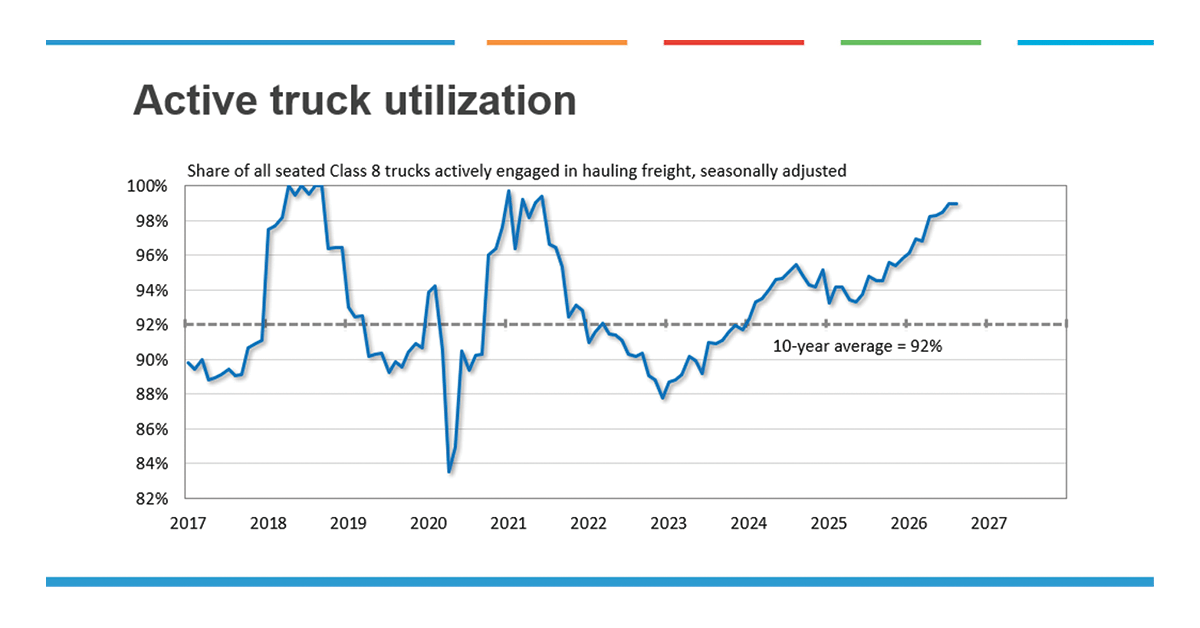
Perhaps the most important development Starks identified is the rapid tightening of trucking capacity. FTR measures capacity utilization by comparing the number of trucks actively moving freight with the number of trucks available and staffed with drivers.
Starks indicated that preliminary analysis suggests utilization may be approaching 100%, which has created an unusually tight environment. However, he cautioned that this does not necessarily mean freight demand is experiencing an extraordinary boom.
 Source: FTR Transportation Intelligence
Manufacturing activity is improving, with industrial production showing modest growth and new capital goods orders pointing toward additional freight demand. Housing activity, meanwhile, remains relatively weak.
A major contributor to tightening capacity is the shrinking pool of available drivers. Starks pointed to declining trucking employment, regulatory enforcement involving commercial driver's licenses, and the closure of driver training schools as factors affecting driver availability.
"If we have active trucks ... and then we have a shrinking driver pool coming, they start bumping up to each other," he explained. The result is a transportation market in which available capacity can become scarce even without a dramatic increase in overall freight volumes.
Starks expects capacity utilization to remain elevated into 2027, potentially easing around midyear. However, he cautioned that the risk remains for capacity constraints to persist longer than currently anticipated.
5. Freight Rates Are Rising Dramatically
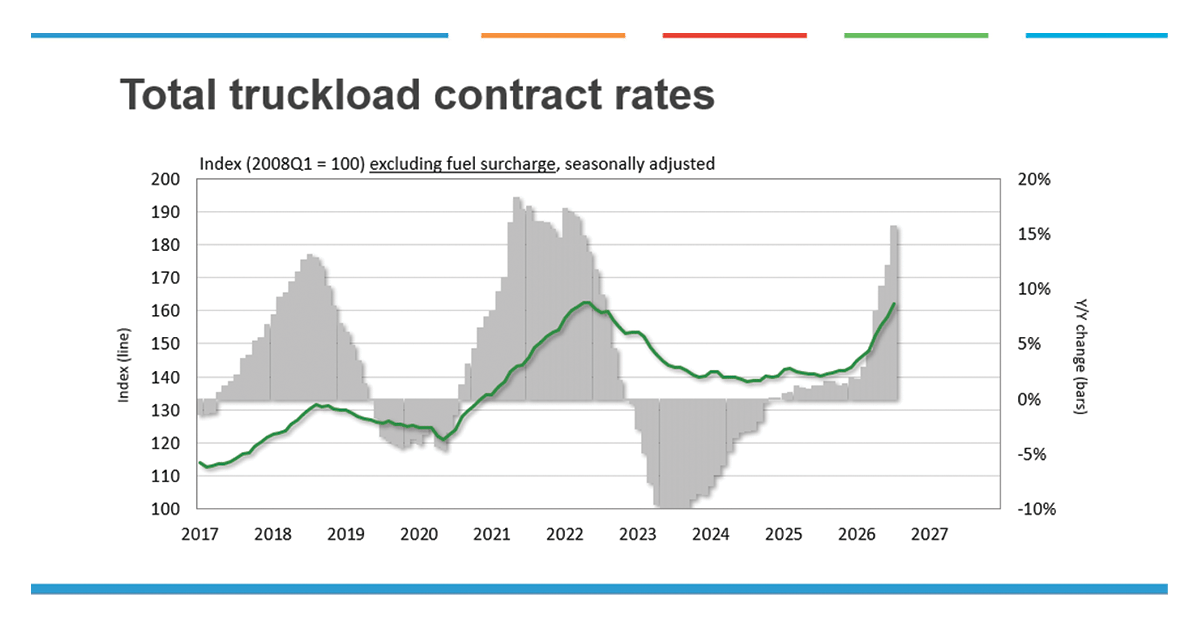
Tightening capacity is translating into substantial increases in trucking rates. According to Starks, contract rates were already showing year-over-year increases exceeding 15% in some comparisons, while FTR's outlook suggested annual average increases of approximately 10%.
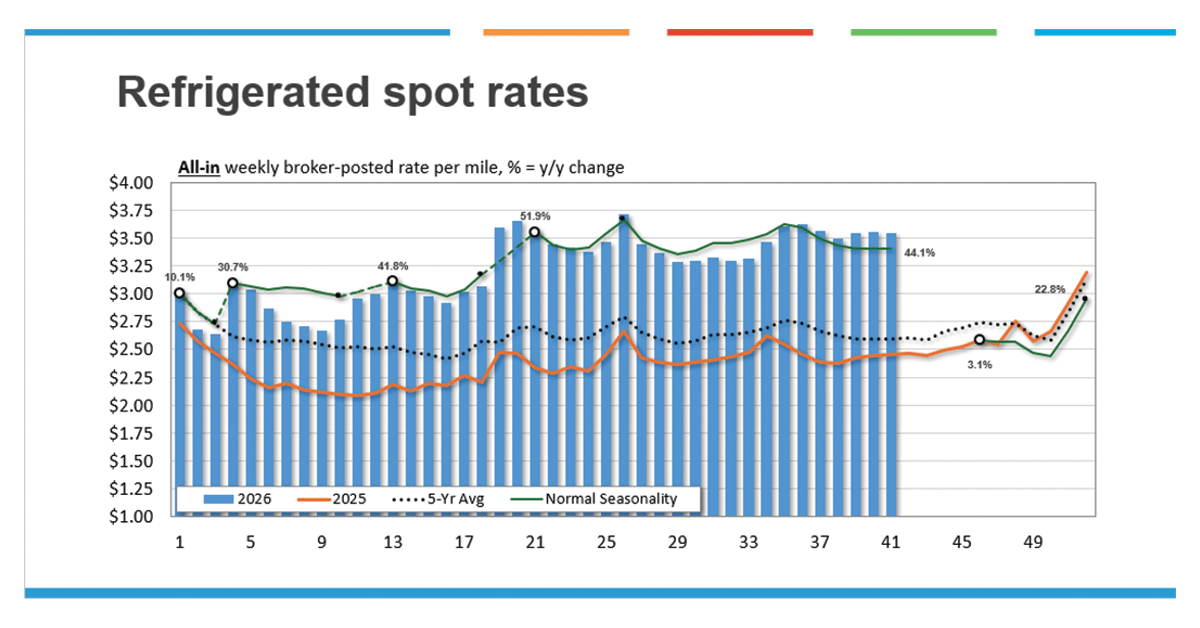
Spot market rates have experienced even more dramatic changes. At the time of his presentation, Starks reported that dry van spot rates were nearly 50% higher than a year earlier, refrigerated rates were up approximately 45%, and flatbed rates were roughly 40% to 45% higher.
 Source: FTR Transportation Intelligence
While the pace of these increases may moderate during 2027, Starks emphasized that slower rate growth does not necessarily mean transportation prices will return to previous levels.
"You're paying a higher rate and that rate stays up there," he explained.
For shippers, this creates an important strategic decision: Should they focus on negotiating the lowest possible transportation rates or securing reliable capacity? Starks believes the answer is increasingly clear.
"Right now capacity is the winner," he said. "You're trying to lock down capacity to make sure that you keep your stuff moved when you want it moved."
He also noted that domestic intermodal transportation is showing strength as shippers explore alternatives to increasingly constrained truckload capacity. However, he suggested that availability — not simply transportation price — may become the deciding factor in modal selection.
 Source: FTR Transportation Intelligence
What Does This Mean for Trucking in 2027?
Starks' outlook suggests that trucking is entering a period of stronger pricing power for carriers, but also significant operational and financial challenges. Higher equipment costs, elevated diesel prices, regulatory uncertainty, and driver availability will continue to influence carrier profitability and fleet investment decisions.
At the same time, tightening capacity and improving freight demand could create opportunities for well-positioned motor carriers. For food shippers, the priorities are shifting toward securing dependable transportation capacity, developing stronger carrier relationships, and preparing for higher freight costs.
Ultimately, Starks emphasized that understanding these interconnected forces is essential for making sound business decisions. His presentation reinforced a central reality of today's freight market: The ability to secure reliable transportation capacity may be just as important as the price paid to move freight.
Related Articles:
- Truck Drivers: Realities of A Talent Shortage in Food Chains
- Supreme Court Strikes Down Trump’s Emergency-Based Tariffs, But…
- FLASH REPORT: A Taxing Time for the U.S. Economy
- Market Impact: Heavy-Duty Truck Tariffs
- Economy Factors: Closing In On An Inflection
Like this kind of content? Subscribe to our "Food For Thought" eNewsletter!

Now more than ever, professionals consume info on the go. Distributed twice monthly, our "Food For Thought" e-newsletter allows readers to stay informed about timely and relevant industry topics and FSA news whether they're in the office or on the road. Topics range from capacity, rates and supply chain disruption to multimodal transportation strategy, leveraging technology, and talent management and retention. Learn More