

by Brian Everett, on Nov 09, 2026
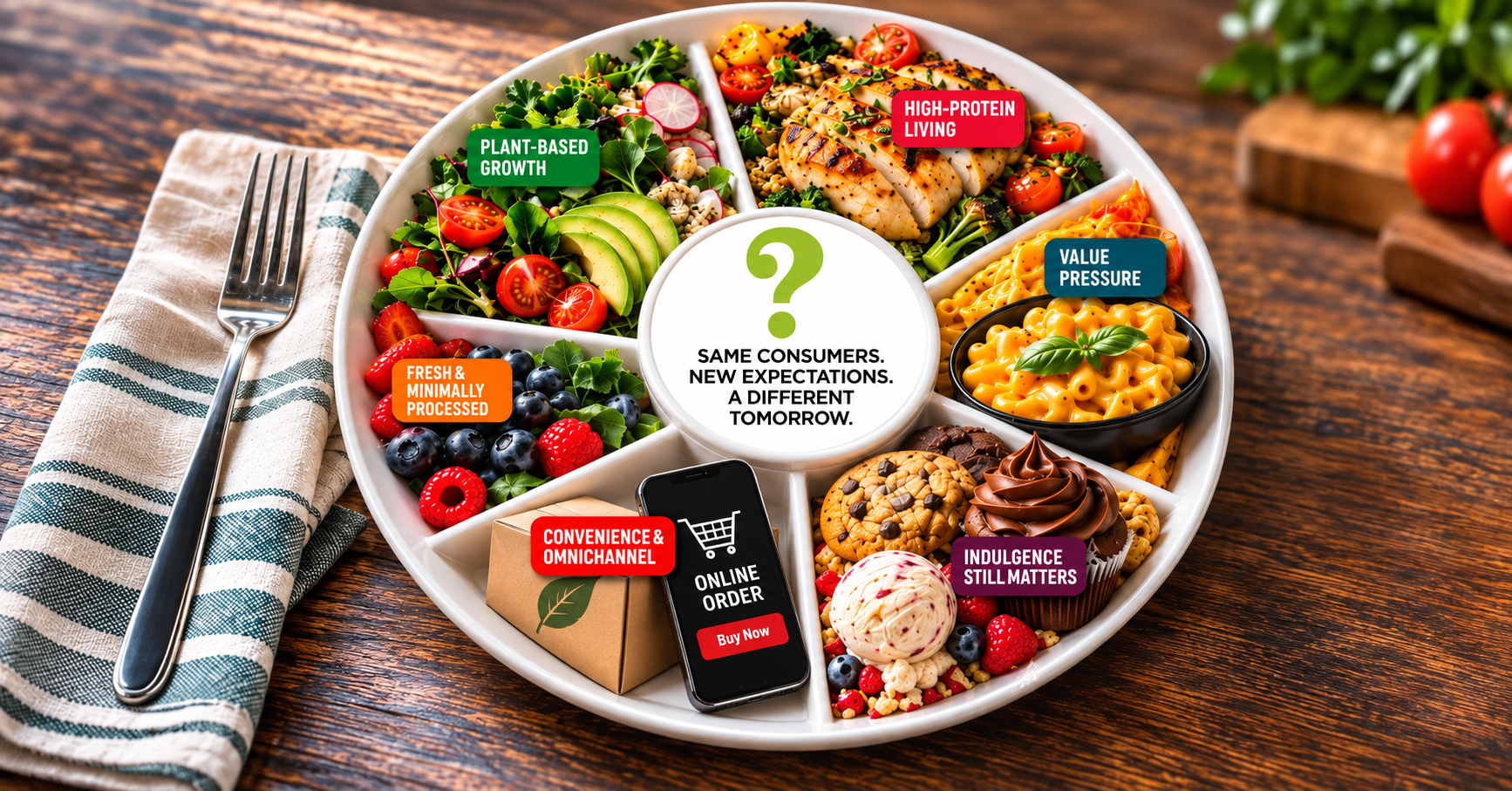
When it comes to demand forecasting, the food industry historically has relied heavily on a straightforward premise: What consumers bought yesterday provides a reasonably good indication of what they will buy tomorrow — that assumption is becoming increasingly risky.
Today’s food manufacturers, retailers and distributors — along with their supply chain partners — are operating in an environment where consumer preferences can change quickly, economic pressures can alter shopping behavior, and a viral social media trend can suddenly send demand for a product soaring. At the same time, retailers expect suppliers to maintain high service levels and respond quickly to shifts in demand.
The result is a difficult balancing act. Produce too much and companies risk excess inventory, markdowns and food waste. Produce too little and they face stockouts, lost sales and disappointed customers.
Consumer Preferences & Behaviors Are Reshaping the Industry
One complication is that consumers are becoming more difficult to define through broad national averages. Preferences can differ significantly by generation, income level, geography and lifestyle.
Protein provides a striking example. Conagra Brands' 2026 Future of Frozen Food report identifies protein-packed foods as one of the major forces reshaping the $93.5 billion U.S. frozen-food category. According to Conagra, high-protein frozen foods generate approximately $12 billion annually and are experiencing double-digit volume growth.
 "Frozen food is no longer just about convenience, it's about meeting consumers wherever and however they're eating," says Bob Nolan, Senior Vice President of Demand Science at Conagra Brands. "As households grow more complex and budgets stay top of mind, frozen food delivers on quality, nutrition and affordability in a big way."
Nolan says these trends are reshaping the U.S. frozen food industry:
High-protein, frozen are surging in popularity. Consumers are finding more ways to meet their protein goals in the freezer aisle, choosing everything from meat and plant-based meals to protein-forward snacks and desserts.
Consumers are bringing restaurant-style experiences home. “Takeout-style” frozen foods now generate $14.3 billion annually, fueled by popular chicken dishes, global flavors and shareable snacks. Younger consumers and families are driving the trend, choosing frozen for restaurant-inspired taste at a more affordable price.
More meals at home are fueling a return to family-style dining. Multiserve frozen meals, pizzas and sides generate roughly $12 billion in sales, while value-size products now accounting for more than 40% in the frozen aisle.
Breakfast is becoming an all-day occasion. High-protein handhelds, bowls and breakfast meats are gaining momentum as Gen Z and Millennials seek convenient, nutritious options they can enjoy as meals or snacks.
Real Case Studies Highlight Shifting Forecasting Trends
Hershey is blending statistical forecasts with current commercial signals. Its current demand planning model combines statistical forecasting with input from Marketing, Sales and Finance. It incorporates promotions, new product launches, seasonality and market trends into demand plans. Hershey also says its broader "decision intelligence" capabilities connect information across its supply chain to optimize inventory, reduce waste and improve service. It estimates these capabilities could reduce inventory by $100 million over two years.
Kraft Heinz is moving from reactive to predictive. Kraft Heinz describes its approach as creating an AI-enabled supply-chain "control tower." Its Kraft Heinz Lighthouse analyzes information across the supply chain to predict challenges and opportunities rather than waiting for disruptions to appear. The company also is using digital twins to run scenarios and determine better operating conditions. This builds on Kraft Heinz's stated strategy of moving toward a predictive and rapid response model, using real-time predictive analytics to anticipate consumer and channel demand and improve inventory transparency.
PepsiCo contends that inflation and economic uncertainty can change what shoppers buy, where they shop, which brands they choose, and how they respond to promotions. In discussing its business environment, the global beverage and convenient foods company says inflationary pressures and broader uncertainty have made consumers more "choiceful and value conscious." Its response includes accelerating innovation, expanding options that address consumers' nutrition and dietary preferences, and enhancing digital capabilities in consumer insights, trade promotion management, demand forecasting and supply planning.
That interconnected approach is increasingly important. A forecast can't simply predict how many cases of a particular SKU will sell. It may need to anticipate what happens when the price changes, a competitor launches a promotion, consumers migrate to a different package size or a dietary trend suddenly accelerates.
Walmart uses artificial intelligence to predict demand and optimize inventory, while machine-learning technology enables it to forecast demand at granular geographic levels and position inventory accordingly. The major retailer also has developed an AI-powered platform called Wally that brings together sales, inventory and demand signals for merchandising teams. The system can identify trends and potential inventory shortages and help merchants coordinate with suppliers to improve product availability. Walmart is going further by connecting forecasting with execution. Walmart says its "selfhealing inventory" technology can detect inventory imbalances and redirect products to locations where they're needed before shortages become apparent in stores.
Conagra Brands no longer relies solely on its own sales history to identify such shifts. Conagra says its Demand Science team combines information from Circana, Nielsen IQ's Label Insight technology, Taste-wise social-media trends and Similar web search data to identify emerging consumer behaviors. This is an important evolution in forecasting. Instead of asking only, "What did customers buy?" companies increasingly need to understand what consumers are searching for, talking about and intending to buy next. Conagra demonstrated how quickly these insights can translate into products last year, when its Banquet brand introduced MEGA Crispy Chicken Tenders with 16 grams of protein per serving. In announcing the product, Conagra cited research indicating that 48% of consumers are actively seeking more protein, while half of Gen Z adults want to add more protein to their diets.
Related Articles:
Like this kind of content? Subscribe to our "Food For Thought" eNewsletter!

Now more than ever, professionals consume info on the go. Distributed twice monthly, our "Food For Thought" e-newsletter allows readers to stay informed about timely and relevant industry topics and FSA news whether they're in the office or on the road. Topics range from capacity, rates and supply chain disruption to multimodal transportation strategy, leveraging technology, and talent management and retention. Learn More