by Brian Everett, on Nov 24, 2026
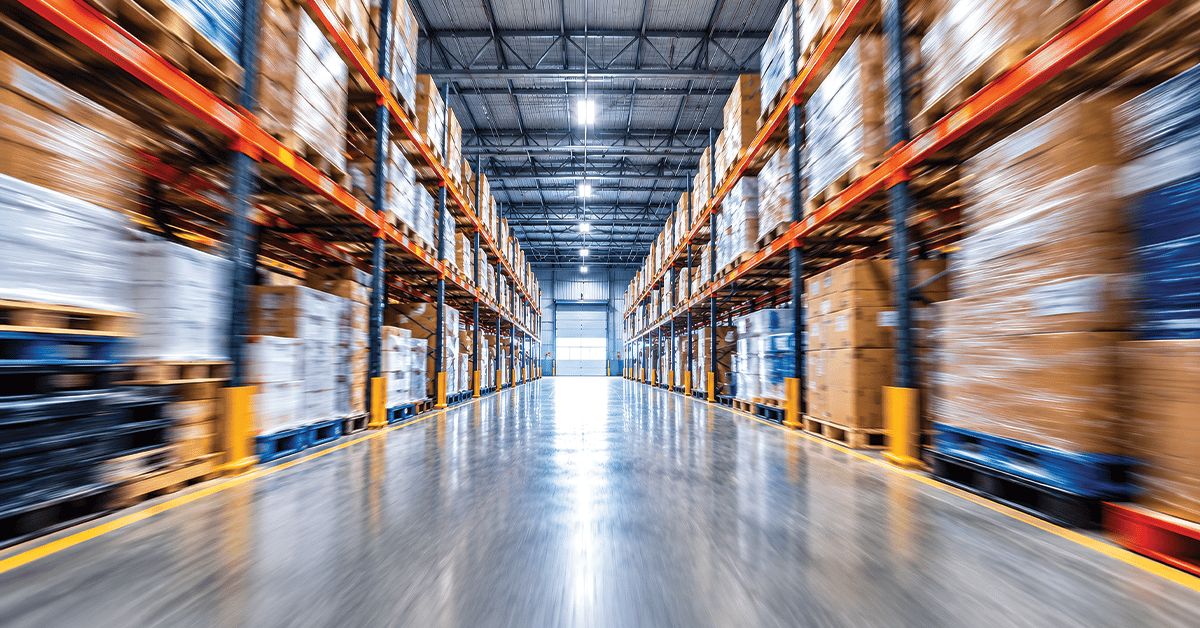
Inventory has always been a balancing act for food shippers. Carry too much and companies absorb higher storage costs, tied-up capital, and greater risk of spoilage or obsolescence. Carry too little and they risk stockouts, missed sales and disappointed customers. However, changing consumer buying patterns, shorter demand cycles and continued supply chain volatility are making that balance increasingly difficult to maintain.
As a result, inventory optimization is evolving from a warehouse management responsibility into a broader supply chain strategy. The question is no longer simply: “How much inventory do we have?” Increasingly, food companies are asking a long list of questions, including: Where should it be? How much should we carry? How quickly can we reposition it? And how will changes in demand affect inventory throughout the network?
This evolution also is changing the role of logistics providers. Leading 3PLs increasingly are moving upstream in their relationships with customers, providing network modeling, inventory visibility, demand and capacity analysis, and integrated transportation planning. Rather than simply storing and moving inventory according to a shipper's instructions, these providers can help determine where distribution points should be located, how products should flow through the network and how inventory and transportation decisions can be coordinated. Ultimately, the conversation is shifting from storing inventory to orchestrating it.
Visibility Comes First
Effective orchestration starts with knowing what's happening throughout the network. That explains the growing importance of supply chain control towers and other visibility platforms that consolidate information involving inventory, orders, production, warehouses and transportation into a common environment.
Visibility can be particularly valuable when you consider shelf life, temperature requirements, promotions, and seasonal demand can make inventory problems expensive very quickly. Seeing that a shipment is delayed is useful; and understanding how that delay will affect inventory at a DC, customer order fulfillment, and downstream transportation is considerably more valuable. Nestlé offers a good example of how this thinking is evolving. Chief Operations Officer Stephanie Pullings Hart describes the company's objective as “100% digitally connected, end-to-end operations.” Nestlé says that vision includes orchestrating its value chain, optimizing inventory and providing real-time supply chain visibility to support better data-driven decisions. The company also reports using advanced planning tools to improve forecasting and inventory control and digital dashboards to create greater global visibility.
AI Changes the Inventory Equation
Artificial intelligence (AI) is adding another dimension. Traditional inventory planning relies heavily on forecasts, historical demand and predetermined safety-stock levels. AI can analyze substantially more information and continuously adjust recommendations as conditions change.
Hershey is applying what it calls decision intelligence across its supply chain. The company says the technology connects information across operations to optimize inventory, reduce waste and improve service. Hershey estimates that over two years its decision-intelligence capabilities could potentially generate $50 million in productivity improvements and reduce inventory by $100 million.
This capability becomes particularly powerful when connected to changing demand signals. Hershey's demand-planning organization, for example, converts consumer, customer, commercial and market signals into item-level forecasts that inform decisions involving supply, inventory, service, waste and financial performance. The process crosses Demand Planning, Supply Planning, Sales, Marketing, Finance, Customer Supply Chain, Data Science and Analytics.
PepsiCo similarly is expanding the role of AI in supply chain decision-making. Its recent collaboration with Google Cloud is designed in part to provide greater speed and precision in modeling complex scenarios. Athina Kanioura, PepsiCo's Chief Strategy and Transformation Officer, says the capability allows the company to model scenarios that previously weren't possible and make decisions faster.
Modeling the Network Before Changing It
Digital twins are taking optimization one step further by allowing companies to test changes virtually before making expensive physical decisions.
PepsiCo recently announced it is working with Siemens and NVIDIA to create digital twins of selected manufacturing and warehouse facilities. The technology can simulate plant operations and the end-to-end supply chain, allowing teams to evaluate configurations, capacity and product flows before making physical changes. PepsiCo says its initial deployment increased throughput 20% and identified up to 90% of potential issues before modifications were made.
The implications go beyond manufacturing. The same type of scenario-based thinking can inform broader questions about where inventory belongs, whether capacity is sufficient and how a network should respond as demand changes.
Technology Plus Relationships
Yet technology alone won't optimize inventory. The best algorithm can't compensate for poor communication among manufacturers, suppliers, logistics providers, carriers and customers.
That's where relationships become critical. Food shippers that give strategic logistics partners greater visibility into forecasts, promotions, inventory requirements and customer expectations give those partners more opportunity to anticipate needs rather than react to orders. In return, 3PLs can bring transportation capacity, network intelligence, market information and operational expertise into the planning process.
The future of inventory management therefore may be less about managing individual warehouses and more about managing the connections among demand, inventory, facilities and transportation. Companies that can combine technology with strong logistics partnerships will be better equipped to position inventory where customers need it, respond when demand changes and avoid unnecessary cost and waste.
For food shippers, that's the real promise of inventory optimization: not simply having less inventory, but having the right inventory, in the right place, with the visibility and flexibility to move it when the market changes.
Related Articles:
- How To Improve Your Inventory Management and Accelerate Replenishment
- Emerging Trends in Supply Chain Visibility
- Omnichannel Creates Shifts to "Anywhere, Anytime" Food Chains
- BJ's Wholesale Club Follows Retail Trend to Cut SKU Count
- The Hidden Complexities of Stocking 10,000 SKUs
Like this kind of content? Subscribe to our "Food For Thought" eNewsletter!

Now more than ever, professionals consume info on the go. Distributed twice monthly, our "Food For Thought" e-newsletter allows readers to stay informed about timely and relevant industry topics and FSA news whether they're in the office or on the road. Topics range from capacity, rates and supply chain disruption to multimodal transportation strategy, leveraging technology, and talent management and retention. Learn More