by Brian Everett, on Apr 15, 2026
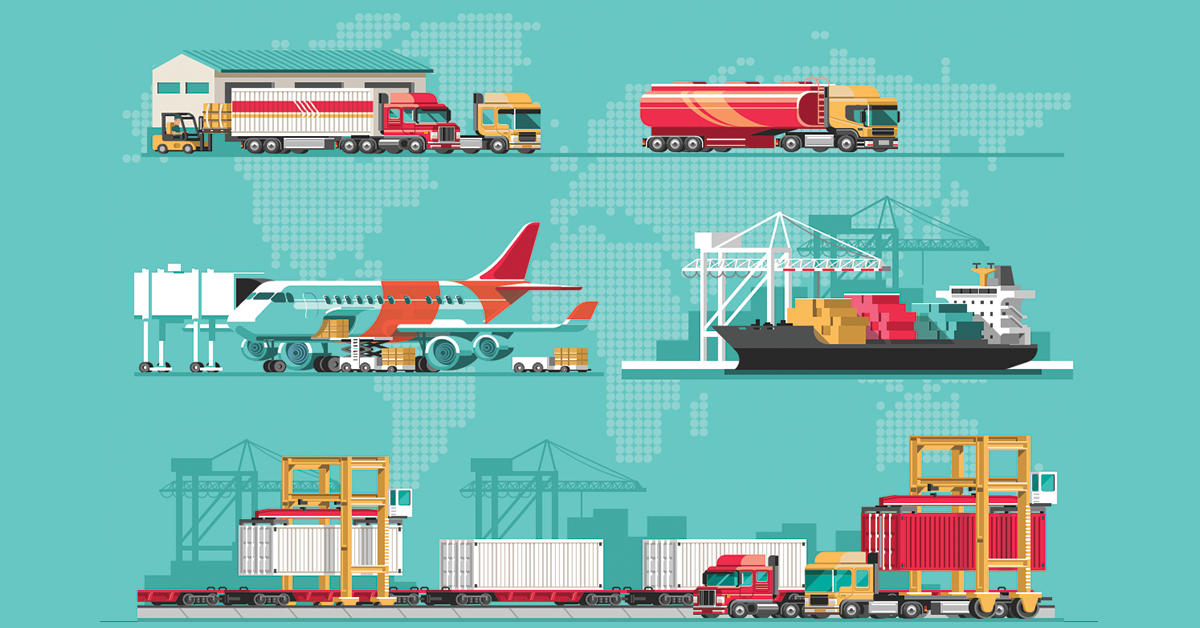
For many food shippers, transportation decisions are about far more than cost. The right freight transport mode can mean the difference between fresh, safe product on the shelf — or spoilage, waste, and unhappy customers. With increasingly complex supply chains, tighter margins, and higher customer expectations, food companies take a strategic approach to determine how their products move.
Many factor in six considerations as they determine mode usage in their supply chain strategy.
Product Characteristics Come First
The nature of the product largely determines transportation choices. Perishable items such as fresh produce, dairy, meat, and frozen foods require temperature control, limited transit times, and careful handling, while shelf-stable goods allow more flexibility.
Of course, maintaining food safety is non-negotiable. Transportation modes must support continuous temperature control, real-time monitoring and alerts, clean, food-grade equipment, and regulatory compliance (FDA, FSMA, USDA). Other key considerations include:
- Required temperature range (ambient, refrigerated, frozen)
- Shelf life and spoilage risk
- Sensitivity to handling, vibration, or delays
- Packaging durability and pallet configuration
Highly perishable items often favor truckload or expedited modes, while longer-life products may move via intermodal or rail to reduce costs.
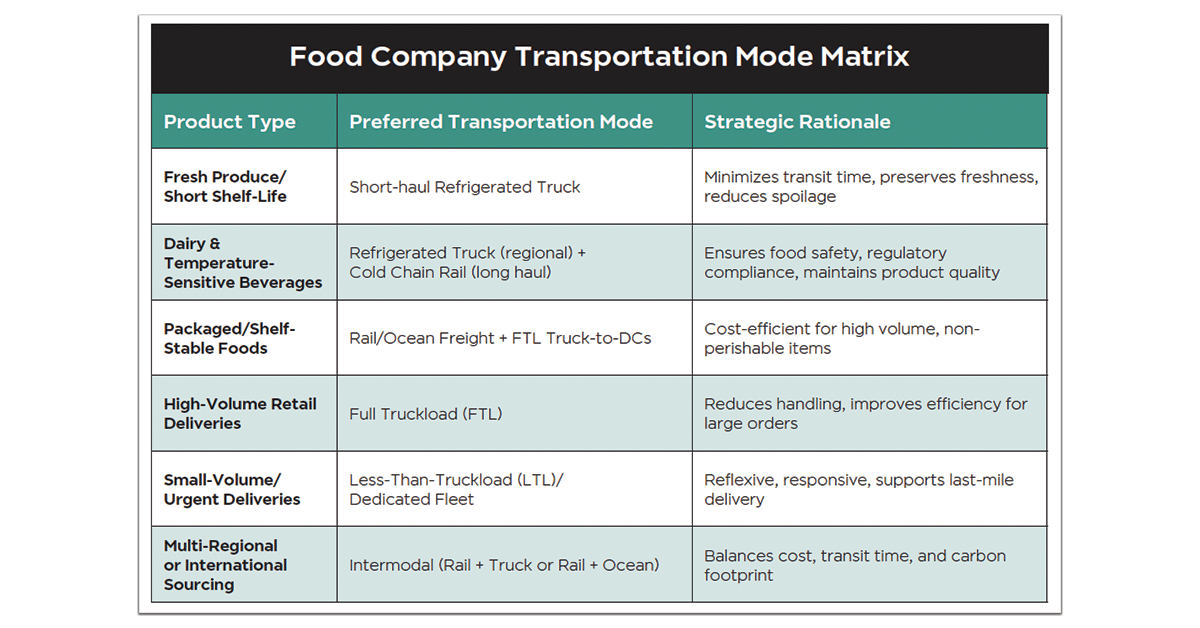
Distribution expenses as a percentage of sales at Nestlé have remained flat, an accomplishment in part achieved by effectively leveraging multimodal strategy. High-volume, non-perishable items are often shipped by rail or ocean to reduce costs, while fresh or sensitive products are transported by dedicated refrigerated trucks for faster, reliable delivery. This allows the “Good food, Good life” company to balance cost efficiency with quality assurance while controlling transportation spend.
Transit Time vs. Cost Tradeoffs
Food companies constantly balance speed and cost. Faster modes such as truckload or air freight reduce transit time and inventory risk but come at a premium. Slower, lower-cost options may increase inventory carrying costs or raise spoilage concerns. Executives typically evaluate:
- Time-to-market requirements set by customers or retailers
- The financial impact of potential spoilage
- Inventory carrying costs versus transportation savings
- Service level agreements (SLAs)
For many, the optimal solution is a blended freight transport strategy, using premium modes for urgent or high-risk shipments and cost-efficient modes for predictable, longer-lead-time lanes.
With 4,000 stores, Chipotle Mexican Grill sources fresh produce from local and regional farms to reduce transit times and preserve quality. Most fresh produce moves via short-haul refrigerated trucks, minimizing time from farm to restaurant. This ensures freshness, reduces spoilage, and allows responsiveness to changing customer demand without relying on long-haul transport.
Distance and Lane Characteristics
Geography plays a major role in mode selection. Short-haul regional moves can rely on truckload or less-than-truckload (LTL), while longer distances may justify intermodal or rail for appropriate freight. When determining mode usage, supply chain executives usually analyze lane length and frequency, origin and destination, access to refrigerated equipment, and seasonal volume fluctuations.
Dedicated lanes with consistent volume are more likely to support rail or intermodal, while variable or time-sensitive lanes favor trucking.
PepsiCo uses regional distribution centers (DCs) to optimize transportation modes and distances to retailers. For example, large-volume shipments to major retailers use full truckloads (FTL) for efficiency, whereas less-than-truckload (LTL) or dedicated fleets are deployed for smaller stores or urgent replenishment needs. This tiered mode approach improves on-time delivery, reduces empty miles, and enhances flexibility in responding to demand spikes.
Reliability and Risk Management
Reliability often outweighs lowest cost in food supply chains. Missed delivery windows can lead to rejected loads, lost sales, or food safety risks. Companies assess mode strengths, carrier performance history, on-time delivery metrics, equipment availability, weather and disruption risk. Many diversify transportation modes and carriers to reduce dependency and improve resilience during disruptions.
Sysco uses a combination of FTL, LTL, and intermodal transportation to manage a wide range of products, from frozen foods to dry goods. For example, high-volume, less-perishable products move via intermodal rail to regional DCs. Temperature-sensitive items are shipped directly via refrigerated truck for quick turnover. This approach optimizes speed, cost, and reliability for a highly complex, multi-product food supply chain.
Sustainability and Environmental Impact
Many leading food shippers such as Kraft Heinz, Nestlé, PepsiCo/ Tropicana, General Mills, Unilever and Conagra Brands are known to factor in sustainability goals to increasingly influence their transportation decisions. Rail and intermodal offer lower emissions per ton-mile compared to trucking, making them attractive for companies with ESG targets. Factors considered include carbon footprint by mode, fuel efficiency, alignment with corporate sustainability goals, and customer expectations around environmental responsibility.
Some food companies now factor emissions data directly into their transportation optimization models.
Customer and Retailer Requirements
Retailers and foodservice customers often dictate delivery windows, modes, or service levels. Food companies must align transportation choices with these expectations to protect relationships and shelf space. Common requirements include tight delivery appointments, drop-and-hook capabilities, appointment scheduling compliance, and temperature documentation.
Meeting customer expectations is often a deciding factor in mode selection.
The Bottom Line
Selecting the right mode of transportation in the food supply chain is a strategic decision that balances product integrity, cost, speed, reliability, and sustainability. The most successful food companies avoid one-size-fits-all solutions and instead build flexible, data-driven transportation strategies that adapt to product needs, market conditions, and customer expectations.
As technology advances and supply chains grow more complex, transportation mode selection will continue to be a critical lever for protecting margins, reducing waste, and delivering safe, high-quality food to consumers.
Leading food companies like Nestlé, PepsiCo, Chipotle, and Sysco demonstrate that a data-driven, flexible, and multi-modal approach not only preserves product quality but also provides a competitive edge in today’s fast-moving, demand-driven food market.
Related Articles:
Like this kind of content? Subscribe to our "Food For Thought" eNewsletter!
Now more than ever, professionals consume info on the go. Distributed twice monthly, our "Food For Thought" e-newsletter allows readers to stay informed about timely and relevant industry topics and FSA news whether they're in the office or on the road. Topics range from capacity, rates and supply chain disruption to multimodal transportation strategy, leveraging technology, and talent management and retention. Learn More