
by Brian Everett, on Nov 19, 2026
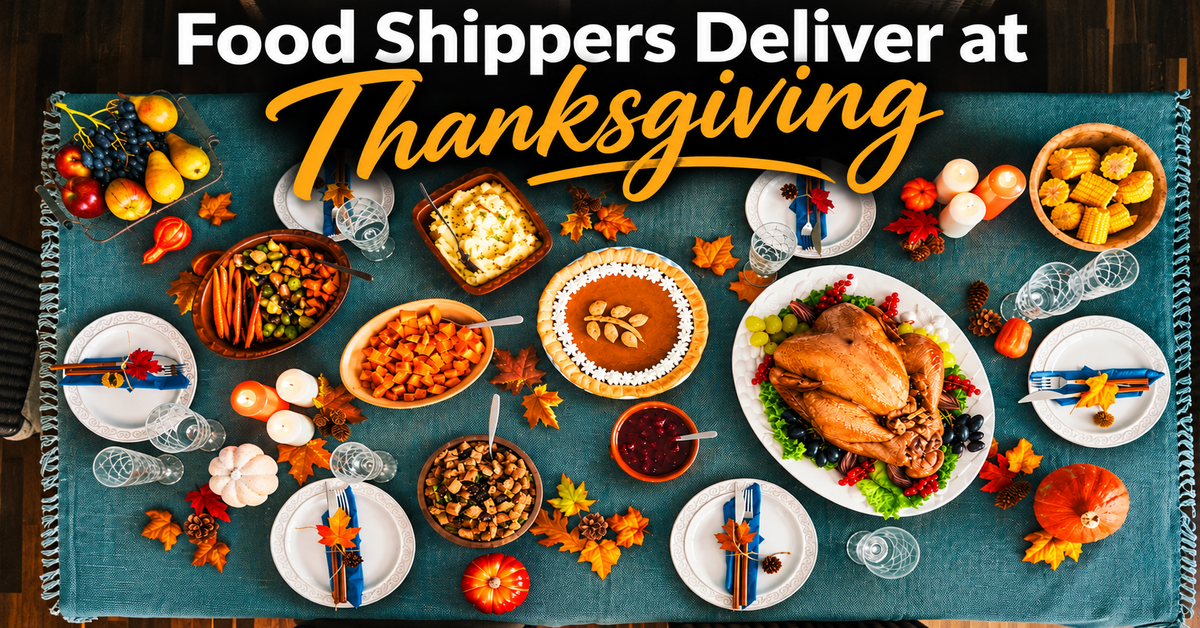
For millions of Americans, Thanksgiving is a time for family, gratitude and a feast of traditional favorites. However, behind every roasted turkey and slice of pie is an enormous network of food manufacturers, distributors, transportation providers, and retailers working to deliver one of the nation's most anticipated meals.
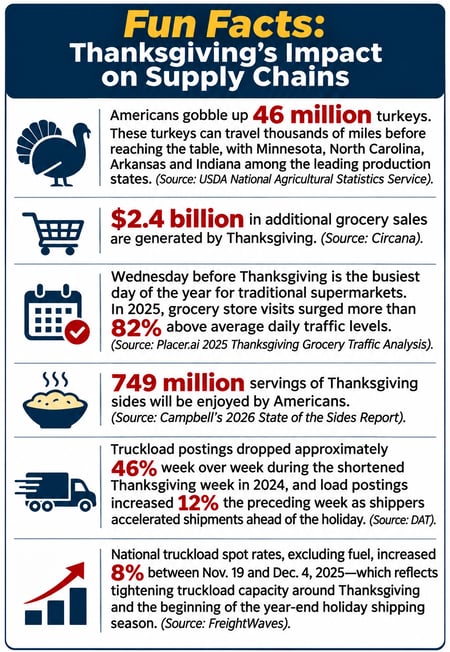
Thanksgiving is big business for the food industry. According to the National Turkey Federation, Americans consume during Thanksgiving approximately 46 million turkeys, representing roughly 1.4 billion pounds of turkey. That's more than one-quarter of the nation's annual turkey production consumed in a single day.
The economic impact extends well beyond turkey. Circana reported that during just one week in November 2025, U.S. retail sales included $82.3 million in fresh potatoes, $19.5 million in stuffing mixes, and $18.8 million in fresh sweet potatoes and yams. These figures represent only a portion of the holiday's enormous grocery demand.
Meanwhile, the American Farm Bureau Federation's 2025 survey found that the average cost of preparing a traditional Thanksgiving dinner for 10 people was $55.18, demonstrating how food producers, retailers and supply chain networks help deliver an affordable holiday meal.
In addition, Thanksgiving ranks as the second-largest holiday food sales occasion for U.S. grocery retailers, behind the combined Christmas, Hanukkah and New Year's holiday season. However, the day before Thanksgiving is typically the single busiest shopping day of the year for traditional supermarkets.
For food shippers, Thanksgiving represents a significant annual test of demand forecasting, inventory positioning, warehousing and transportation capacity, and supply chain execution.
What's on America's Thanksgiving Plate?
While holiday menus vary by region and family tradition, several foods consistently dominate the holiday table. According to Campbell's 2026 State of the Sides Report, 86% of Americans plan to serve at least four side dishes, with an estimated 749 million servings of sides nationwide. The report identifies five favorites, while turkey remains the traditional centerpiece:
- The main attraction: turkey remains synonymous with Thanksgiving. Butterball's 2025 Togetherness Report found that 84% of dinner hosts planned to serve turkey. Meeting this concentrated demand requires producers to coordinate breeding, raising, processing, freezing and distribution months before November. Carefully maintaining specialized product quality and temperature throughout the cold chain is essential.
- Stuffing and dressing rank as America's favorite Thanksgiving side dishes. Whether prepared from packaged mixes or homemade recipes, it generates demand for bread products, seasonings, vegetables and broth. Manufacturers must build inventory ahead of the holiday, particularly for shelf-stable products that retailers can stock well in advance.
- Mashed potatoes rank second among Thanksgiving side dishes. Demand extends across fresh potatoes, refrigerated prepared products, frozen offerings, butter and dairy ingredients. Unlike shelf-stable products, fresh potatoes require careful attention to storage conditions, handling and transportation to preserve quality and minimize shrink.
- Sweet potatoes and Yams rank third and are particularly popular in traditional holiday casseroles. Their seasonal demand creates opportunities and challenges for growers, packers and distributors. Proper curing, storage, packaging and transportation help ensure that harvested crops remain available and in good condition during the holiday selling season.
- Macaroni and cheese ranks fourth and is particularly popular with younger consumers. Campbell's 2026 report identifies it as Generation Z's favorite holiday side for the second consecutive year. Its popularity drives demand for pasta, cheese, dairy products and prepared foods, requiring coordination across multiple ingredient supply chains.
- Green bean casserole rounds out the top five sides. Combining green beans, condensed soup and crispy fried onions, the popularity of this dish illustrates how a traditional recipe can simultaneously drive significant seasonal demand for several product categories. Campbell's reports selling nearly 40 million cans of Cream of Mushroom soup during the holiday period.
Creating Peak Demand for Food Companies
Behind these familiar foods are major manufacturers whose supply chain operations demonstrate the complexity of serving millions of holiday meals.
Hormel Foods, through its Jennie-O turkey business, is one of the nation's major turkey processors and marketers. Its supply chain encompasses turkey production, transportation to processing facilities, processing and distribution of finished products. The company emphasizes animal-handling standards and transportation practices throughout its operations, conducting more than 1,000 turkey audits in 2025.
Thanksgiving adds another dimension to this process. Turkey producers must anticipate demand well ahead of the holiday, align processing schedules with retailer orders and manage frozen and refrigerated inventories. For transportation providers, dependable temperature-controlled capacity is particularly important as products move from processing facilities to distribution centers and grocery stores.
The Campbell's Company’s portfolio includes Campbell's condensed soups, Swanson broths and Pepperidge Farm products—all ingredients associated with green bean casserole, stuffing and other Thanksgiving favorites.
Campbell's supply chain must coordinate ingredient procurement, manufacturing, packaging, warehousing and distribution to meet seasonal retail demand. Shelf-stable products provide an important advantage: manufacturers and retailers can build inventory ahead of peak shopping periods rather than relying entirely on last-minute deliveries.
The company's reported holiday sales of nearly 40 million cans of Cream of Mushroom soup demonstrate the importance of accurate forecasting and coordinated replenishment. A product used year-round can experience particularly concentrated demand when it becomes a key ingredient in a holiday tradition.
Ocean Spray cranberry sauce remains a Thanksgiving tradition for many, and the company provides an example of specialized agricultural supply chain coordination. The farmer-owned cooperative includes approximately 700 family farmers who grow cranberries in North America and other growing regions.
Cranberries are harvested in the fall, creating a natural connection between agricultural production and Thanksgiving demand. Ocean Spray's supply chain must coordinate harvesting, fruit handling, processing, packaging and distribution of fresh cranberries, sauces and other products.
Fresh cranberries require timely movement and appropriate temperature management, while processed and shelf-stable products offer greater flexibility for advance inventory positioning. This combination of seasonal agricultural production and year-round manufacturing illustrates how food shippers manage different product requirements within the same supply network.
Amazon Grocery Introduces Holiday Meal with Same-Day Delivery
Earlier in November, Amazon announced a complete Thanksgiving Meal for just $25 from Amazon Grocery with turkey as low as $0.79 per lb., delivered to the door with free same-day delivery on orders of $25 or more. Available through Nov. 26 while supplies last, the meal includes an 8 lb. turkey plus ingredients for classic sides and dessert. Customers in more than 2,300 cities and towns across the U.S. where Amazon offers fresh groceries with same-day delivery can get the meal deal delivered to their doors within hours, alongside their choice of millions of other items and checkout from a single cart with prices that meet or beat other retailers.
“Customers love the convenience of getting everything they need for the holidays delivered so they can come together with family and friends,” says Jason Buechel, Vice President of Amazon Worldwide Grocery Stores and Chief Executive Officer at Whole Foods Market.
The $25 Thanksgiving meal features familiar favorites from brands customers know and value, including an 8 lb. Butterball frozen turkey, Ocean Spray jellied cranberry sauce (14 oz can), two McCormick turkey gravy mix packets (.87 oz each), two Kraft Mac & Cheese (7.25 oz each), Stove Top turkey stuffing (6 oz), Campbell’s Cream of Mushroom Soup (10.5 oz), French’s Crispy Fried Onions (2.8 oz), and Nestlé Carnation Evaporated Milk (12 fl oz), alongside Amazon Grocery private brand staples including russet potatoes (5 lb), two cans of canned whole kernel corn (15.25 oz each), whole carrots (16 oz), two cans of cut green beans (14.5 oz each), crescent rolls (8 oz, 8 count), two pie crusts (15 oz), and organic pumpkin puree (15 oz).
Now the second-largest grocer in the U.S., Amazon’s Same-Day Delivery fulfillment centers offer tens of thousands of grocery and everyday household essentials items, four times that of a typical grocery store’s total selection, and customers can add millions of other items available for same-day delivery to the same cart. Last quarter, fresh groceries made up all 10 top best sellers on same day delivery.
Supply Chains Behind the Celebration
Thanksgiving may last only one day, but delivering the holiday meal is a year-round undertaking. For food manufacturers, grocery retailers, and their logistics partners, success depends on anticipating consumer demand, coordinating agricultural production, managing inventory, securing transportation capacity, and ensuring products arrive on store shelves when consumers need them.
The stakes are particularly high because Thanksgiving demand is concentrated within a very narrow window. A late delivery, unexpected shortage or cold-chain disruption can mean lost sales and disappointed consumers, with little opportunity to recover once the holiday has passed.
Ultimately, Thanksgiving is more than a celebration of food and family. It's also a powerful reminder of the people, partnerships and supply chains that make America's holiday traditions possible.
Related Articles:
- Rusi Kombalov at Ocean Spray: Advice for Supply Chain Success
- Generative AI Transforming Food Supply Chains, One Decision at a Time
- The Name of the Game for Providers: Provide Value
- Hormel Foods: Food Chain Spotlight
- Campbell’s Food Chain Snapshot
Like this kind of content? Subscribe to our "Food For Thought" eNewsletter!

Now more than ever, professionals consume info on the go. Distributed twice monthly, our "Food For Thought" e-newsletter allows readers to stay informed about timely and relevant industry topics and FSA news whether they're in the office or on the road. Topics range from capacity, rates and supply chain disruption to multimodal transportation strategy, leveraging technology, and talent management and retention. Learn More