
by Brian Everett, on Apr 02, 2026
Major food enterprises are navigating one of the most consequential periods of change the supply chain has seen in decades. Heightened food safety expectations, rising transportation costs, labor constraints, and increasing pressure to reduce environmental impact are forcing shippers to rethink how products move from farm to fork.
In response, leading food brands are sharpening their focus on safety and operational efficiency, recognizing that resilient supply chains depend on both flawless execution and proactive risk management.
At the same time, food shippers are accelerating supply chain transformation initiatives that balance near-term performance with long-term sustainability goals. Investments in technology, network optimization, and collaborative partnerships are helping companies improve visibility, streamline operations, and reduce emissions — without sacrificing service or reliability.
Here’s a look at where three major food companies are prioritizing their time, energy and resources to create a major impact on their supply chain success.
UNFI Drives Safety, Effectiveness, Efficiency Through Supply Chain Strategy
 United Natural Foods, Inc. (UNFI), a major North American food wholesaler, has seen improvements across its supply chain from the introduction of a new approach to operations, particularly at its distribution centers. While continuing its push for stronger profitability and efficiency as part of a larger turnaround, UNFI has introduced a standardized lean operating model in 34 of its 49 distribution centers, according to Mark Bushway, Chief Supply Chain Officer during a recent investor day. The model is built on a Lean management philosophy, which prioritizes continuous process improvement.
“Our supply chain at scale creates a competitive advantage for retailers, suppliers and UNFI,” says Bushway. He says improved fill rates and on-time delivery enhance reliability and effectiveness across the company’s network. In addition, investments in effectiveness build resilience and agility to serve evolving market needs.
The company is working toward creating a “next generation supply chain” through four focused areas in their supply chain roadmap:
- Expand automation to strengthen operational performance
- Broaden AI capabilities to increase forecasting and replenishment accuracy
- Optimize the company's DC network to support growth and returns on investment capital
- Scale Lean across all DCs to standardize processes
“We’re confident in our roadmap,” he concludes. “Every step strengthens our commitment to safety, effectiveness and efficiency – fueling long-term value creation.”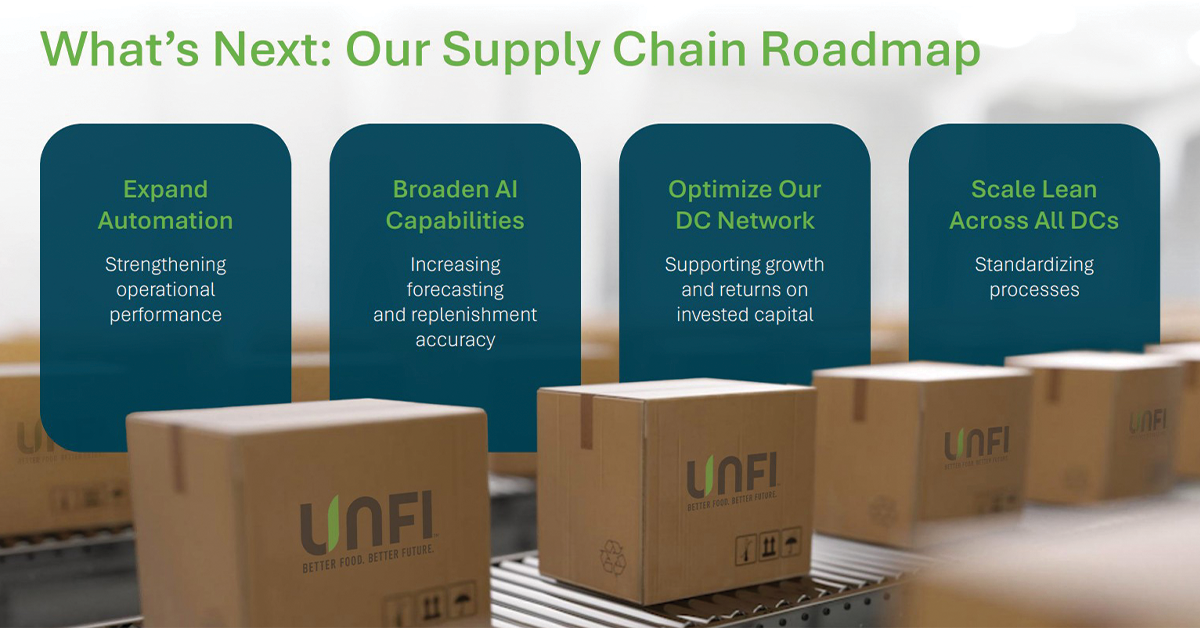 Photo: UNFI Investor Day
Walmart Supply Chain Transformation Fuels Impressive Growth
 Walmart is driving success through a supply chain transformation that has capitalized on the retailer’s incredible speed capabilities, enabled by store and supply chain assets. But this transformation isn’t just about improving operations, it’s fueling growth, according to David Guggina, Chief eCommerce Officer, Walmart U.S., who led the retail giant’s supply chain initiatives at a critical time of its transformation.
“The foundation of our progress – and the fuel for our future – is our people, our supply chain, and the unmatched reach of our store network,” says Guggina. “Before I stepped into this role, I led the Supply Chain team as we set out to transform and connect our U.S. network.”
“When you look at all the pieces coming together, you can see the true end-to-end platform we’ve built,” continues Guggina. “It’s powered by data, intelligent software, AI, and physical automation – all working together to create a faster, smarter, and more seamless experience for our customers.”
This supply chain transformation has given Walmart clearer visibility into inventory, expanded its capacity, created more accuracies, accelerated speed, and allowed Walmart to scale its eCommerce business in a way that’s more sustainable, efficient, and drives a lower cost to serve, he says.
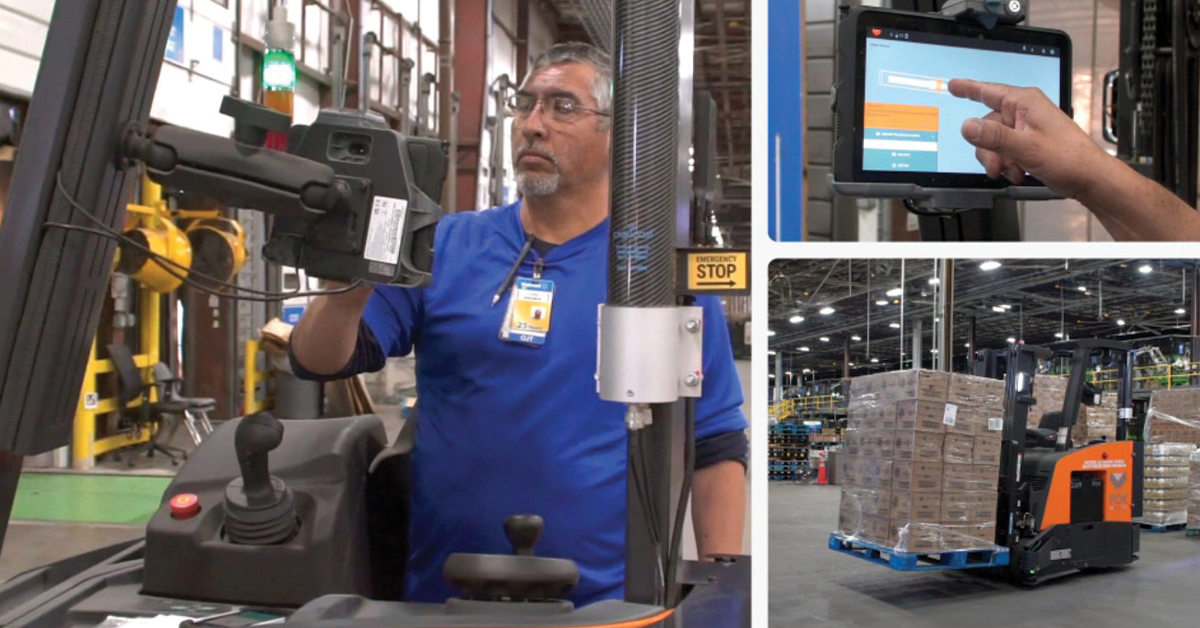 Walmart is now using autonomous forklifts across four high-tech DCs within its supply chain network.
Cargill Advances Dry-Bulk Maritime Decarbonization Through Fleet Technology
Cargill is one of the largest transporters of dry and bulk cargo, completing more than 4,500 voyages each year. Cargill operates around 650 vessels at any one time. With this in mind, this global food and agricultural giant has placed a significant investment of time and resources to help decarbonize global shipping.
Cargill recently announced the maiden voyage of Brave Pioneer, the first of five green methanol dual-fuel dry bulk vessels chartered by the company. The deployment of the Brave Pioneer marks another important milestone in Cargill’s broader decarbonization efforts – one focused on innovation, testing and learning as the company works with customers and partners to refine future-ready solutions for Cargill and the industry.
Owned by Mitsui & Co., Brave Pioneer is equipped to operate on both conventional marine fuels and green methanol, a lower-carbon alternative. The estimated CO2 saving of using green methanol compared to conventional fuel is up to 70%.
Cargill will conduct a series of operational trials designed to evaluate green methanol bunkering readiness, understand how environmental attributes can be traced and verified through carbon accounting systems, and assess market appetite for low-carbon freight services.
 “Decarbonizing global shipping requires a mix of technologies and the willingness to take bold steps before the entire ecosystem is ready,” says Jan Dieleman, President of Cargill’s Ocean Transportation business. “Technologies like green methanol or wind-assisted propulsion come with uncertainty. But as an industry leader, we have a responsibility to test these innovations on the water, share what we learn, and help shape the systems and standards that will enable wider adoption.”
The launch of Brave Pioneer paves the way for the four additional vessels that will join Cargill’s fleet over the coming years. The addition of these vessels strengthens Cargill’s multi-solution decarbonization approach, which includes wind-assisted propulsion, voyage optimization technologies, energy-efficiency retrofits and exploration of alternative fuels such as biofuels and ethanol.
Each represents another step in the company’s broader efforts to embed sustainability into global ocean supply chains and support customers looking for practical, lower-carbon freight options.
“We know the road to low carbon shipping will require a mix of solutions and green methanol is one part of that portfolio,” Dieleman continues. “Our new fleet is about optionality and adaptability. These vessels are engineered to perform at a bestin- class level on conventional fuel today, while allowing us to switch to greener fuels as availability improves. It’s a practical way to future-proof ocean transport.”
As one of the world’s largest charterers of dry bulk freight, Cargill’s actions send a strong demand signal to the market and serve as an open invitation for others in the maritime sector to join in advancing the transition to sustainable shipping.
The initiative supports Cargill’s broader effort to reduce supply chain emissions and invest and test practical innovations that advance progress toward a more sustainable global food system. Green methanol-enabled vessels — paired with the eventual expansion of renewable fuel supply — are expected to play a meaningful role in reducing maritime emissions over the coming decade.
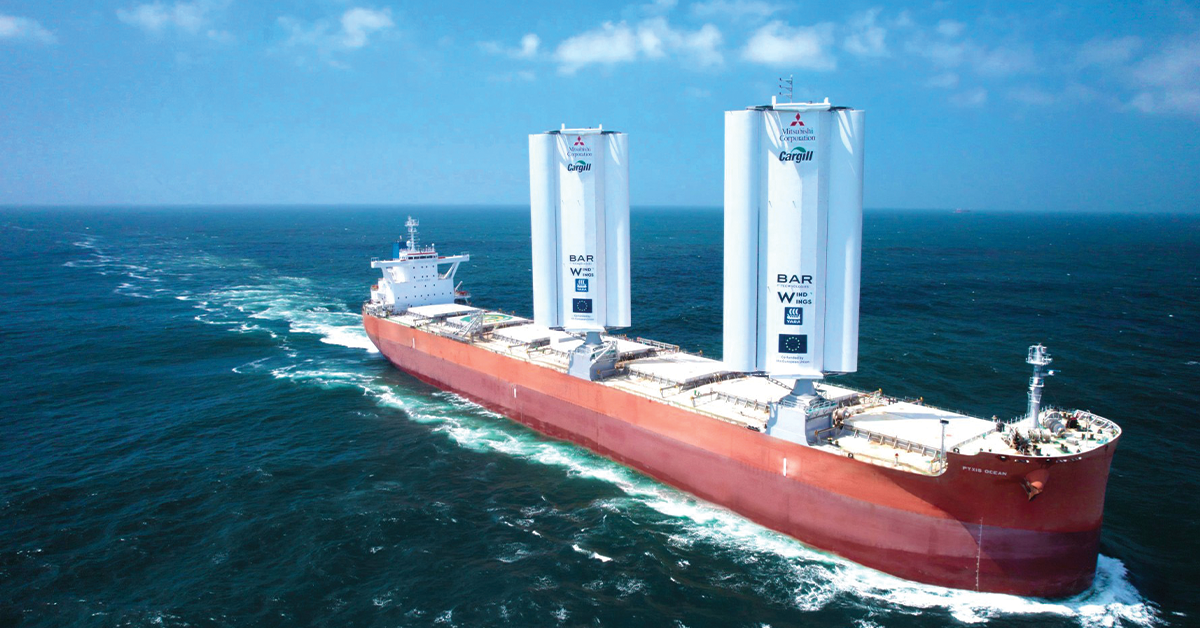 In 2023, Cargill tested new technology to bring cutting-edge wind propulsion to commercial shipping for the first time. This vessel is retrofitted with two WindWings, which are large wing sales to harness the power of wind while in transit.
Related Articles:
Like this kind of content? Subscribe to our "Food For Thought" eNewsletter!

Now more than ever, professionals consume info on the go. Distributed twice monthly, our "Food For Thought" e-newsletter allows readers to stay informed about timely and relevant industry topics and FSA news whether they're in the office or on the road. Topics range from capacity, rates and supply chain disruption to multimodal transportation strategy, leveraging technology, and talent management and retention. Learn More